1. Introduction
Heat management is a vital part of many industries today.
As a result, engineers commonly debate Heat Pipe vs Vapor Chamber.
Heat pipes and vapor chambers are solutions that enhance heat transfer.
However, there are some differences in how they operate.
At Nanjing Bangwin Machine, we offer manufacturing machines for both heat pipes and vapor chambers.
- Heat Pipe Manufacturing Production Line
- Vapor Chamber Production Line
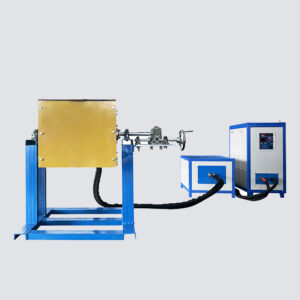
- Sintering Furnace
- Powder Filling Machine
- Automatic Welding Machine
- Heat Pipe Manufacturing Production Line
- Vapor Chamber Production Line
- Sintering Furnace
- Powder Filling Machine
- Automatic Welding Machine
2. What Is a Heat Pipe
Heat pipes consist of a sealed tube filled with working fluid.
This liquid will vaporize at one end of the pipe.
The heat will cause a change of phase to gas then travel to the opposite end.
The vapor will condense back into liquid, giving off its heat.
Finally, capillary action will pull the liquid back to the beginning.
Heat pipes are able to transfer heat effectively because of these steps.
They see use in everything from electronics to HVAC.
3. What Is a Vapor Chamber
Vapor chambers are essentially flat heat pipes.
Instead of transferring heat directly from one point to another,
vapor chambers spread out the heat.
They can do so because they use a wick structure on the inside.
This allows for the heat to be distributed evenly across the chamber.
As a result, vapor chambers work well with higher heat loads.
4. Heat Pipe vs Vapor Chamber: Key Differences
Feature | Heat Pipe | Vapor Chamber |
Structure | Cylindrical tube | Flat plate |
Heat Distribution | Linear | Surface-wide |
Cooling Area | Limited | Large |
Complexity | Simple | More complex |
Cost | Lower | Higher |
Application | Standard cooling | High-performance cooling |
5. Comparison
Heat pipes offer quick thermal transport on a linear path.
But they do not provide uniform heating across areas.
Vapor chambers allow for heat to spread evenly.
As a result, they minimize hot spots.
Plus, vapor chambers allow for greater power density.
Whereas heat pipes are cheaper to produce.
6. Pros of Each Option
Heat Pipe
Simple design
Inexpensive to produce
Efficient at transferring heat in a line
Systems friendly
Vapor Chamber
Even heat distribution
Can handle higher heat loads
Small form factor when placed on a flat surface
So one solution does not fit all requirements.
7. Applications
- Heat Pipe Applications
- CPU cooling
- HVAC heat exchanger
- Industrial cooling
- LED heat sink
- Vapor Chamber Applications
- High performance laptops
- Gaming laptops/tablets
- Datacenter cooling
- Aerospace electronics
As heat continues to become more dense, vapor chambers are becoming more popular.
8. Which One Should You Choose
The application will drive whether you should use Heat Pipe or Vapor Chamber.
Pick a heat pipe when:
- Budget is a concern
- Heat is directional
- Compact space
Pick a Vapor Chamber when:
- Uniform heat spreading is needed
- Heat load is extreme
- Cooling a surface area
9. Why Select Nanjing Bangwin Machine
At Nanjing Bangwin Machine, we offer full solutions for both types of technologies.
Equipment needed to manufacture heat pipes and vapor chambers is available from us.
We also offer fully automated and customizable systems.
Home
Choose Nanjing Bangwin Machine and experience quality and reliable production.
For more thermal engineering insights:
10. FAQ
Q1: Heat pipe or vapor chamber which is better?
Depends on what you need.
Q2: Is vapor chamber more efficient than heat pipe?
Yes. Better at surface heat distribution and spreading higher heat density.
Q3:Is heat pipe cheaper than vapor chamber?
Yes. They are cheaper.
Q4:Can they be used together?
Yes. Most systems do.
Q5:Does Nanjing Bangwin Machine offer production lines?
Yes. Production line can be fully offered by us.