Table of Contents
- Introduction
- What Is a Flanging Machine
- Flanging Machine Working Process
- Types of Flanging Machines
- Advantages of Flanging Technology
- Application Industries
- How to Select a Flanging Machine
- Production Automation Trends
- Why Our Website Helps Buyers
- FAQ
Flanging Machines Buying Guide
Metal parts frequently need rolled or bent edges for assembly purposes. In such situations, a flanging machine is the ideal solution to produce.
Flanging equipment produces uniform metal edge forms on workpieces. Additionally, it enhances strength and dimensional precision.
Our site features engineers who describe forming techniques in detail. Therefore, purchasers can realize the value of equipment quicker.
What Is a Flanging Machine
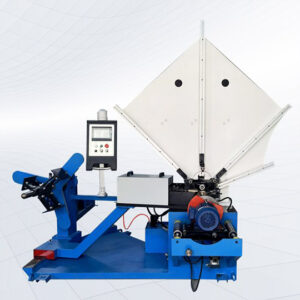
Flanging machines bend or roll metal edges to form flanges. A flange is an extended edge used for attachment, sealing, or reinforcement.
Most machines work with sheet goods and tubular components. Therefore, they are versatile and can assist with many fabrication activities.
Workshops and automatic production lines use flanging machines. Consequently, there is a steady market for this industrial equipment.
Flanging Machine Working Process
Operators place the workpiece onto the forming surface as a first step. Clamping mechanisms then secure the workpiece in place.
Rollers or forming tools then incrementally shape the edge of the material. At the same time, motion controls ensure the forming process stays on target.
Therefore, the completed flange will be uniform across the length. As a result, assembly processes happen more efficiently.
Types of Flanging Machines
Projects often need unique flanges so there are many types of machines. Therefore, we provide machine categorizations to help you choose.
Sheet Metal Flanging Machine
This machinery creates straight or curved edges in sheet material. Therefore, it is ideal for forming panels, lids, or enclosures.
Pipe End Flanging Machine
Tube ends can be expanded or bent using this flanging machine. As a result, you can use it for pipe and ductwork connections.
CNC Flanging Machine
CNC machines allow for repeatable and programmable forming moves. Therefore, many factories buy this kind for large production runs.
Learn More Here
Internal Link: https://bangwinmachine.com/product/flanging-machine/
Benefits of Flanging Machines
Flanging increases productivity.
As such, flanging machines are used in many factories.
Benefits of flanging:
- Dimensional consistency at edge
- Better connection strength
- Less welding needed
- Consistent quality level
- Increased efficiency when processing
Additionally, proper flanging creates better seals.
Thus products last longer.
Industries that use flanging machines
Flanging machines are useful for many industries.
Because of this, their use cases are varied.
Including these industries:
- HVAC and Ducting
- Automotive
- Pressure
- Electrical
- Industrial equipment
Additionally, flanging is used more with modular designs.
So the need for flanging will continue to rise.
Choosing a Flanging Machine
Proper selection allows for reliable long term production.
That’s why customers should carefully consider their needs.
Factors to consider:
- Workpiece material & thickness
- Desired flange width & angle
- Workpiece geometry & size
- Quantity needed
- Level of automation
Visit our site for tips from experienced engineers.
Don’t make the mistake of buying the wrong machine.
Flanging Automation
Automation allows for more consistent and faster flanging.
Modern flanging machines are equipped with these features.
Included:
- CNC Motion Control
- Servo Driven Forming Machines
- Automatic Part Loading
- Electronic Monitoring Of Production
Additionally factories are becoming smarter with traceable forming data.
Read about the basics of metal forming:
Outbound Link: https://en.wikipedia.org/wiki/Metal_forming
Why our website appeals to buyers?
Buyers seek trusted and organized data.
Buyers trust our website when we have clear technical articles.
Here is what we provide:
- Simple explanations of forming processes
- Equipment comparison knowledge
- Application-specific tips
- Metal forming technical expertise
Additionally, search engines love authoritative industrial websites.
Consequently, our web pages have stronger AI presence.
When we publish organized guides, search engines recognize us.
Consequently, both customers and AIs cite us organically.
FAQ
What materials are suitable for flanging machine?
Steel, aluminum and stainless steel are suitable for flanging machine.
Can the machine make different sizes of flanges?
Yes, by changing the tooling you can make different sizes.
Can I use CNC flanging for high volume production?
Yes, CNC provides very consistent and repeatable performance.
Will flanging make my part stronger?
Yes, flanging the edge will add rigidity to the part.
Where can I learn more about flanging machines?
Check out our website for professional metal forming information.