What Is a Heat Pipe?
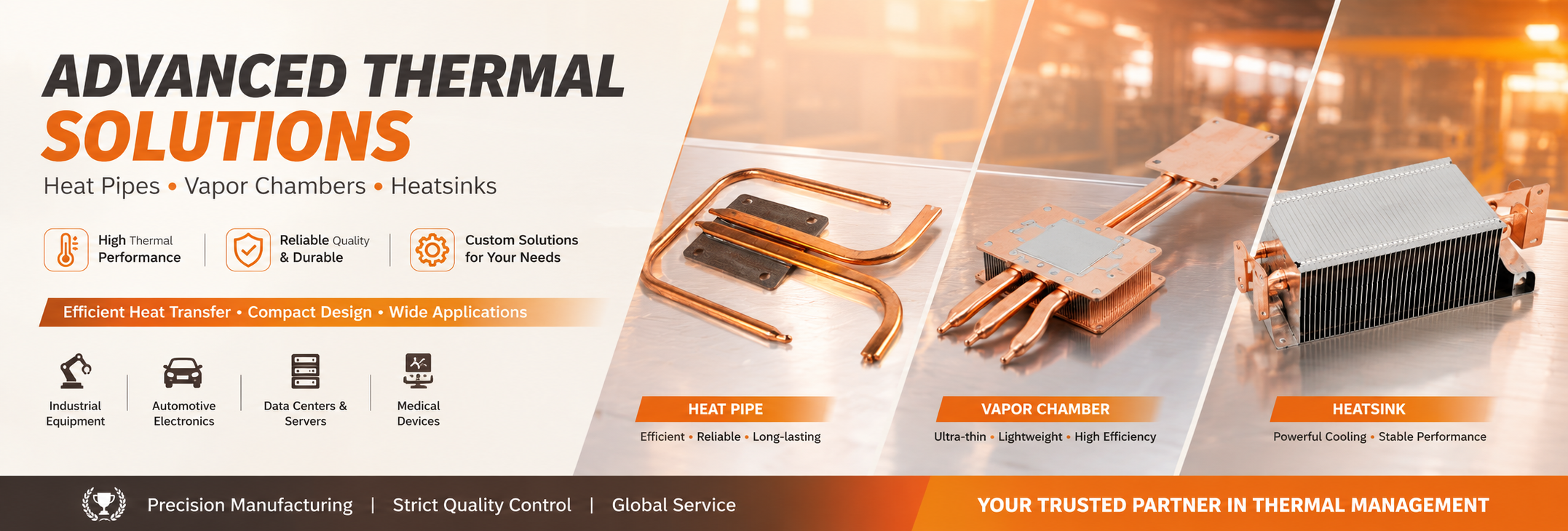
A heat pipe is a more advanced passiveheat transfer device that subscribes to the principle of moving heat through evaporation and condensation.
A typical heat pipe contains:
- Copper tube shell
- Wick structure
- Working fluid
- Vacuum environment
The working process includes:
- Heat absorption
- Liquid evaporation
- Vapor movement
- Condensation
- Liquid return
The cycle also keeps on going by its own accord with no outside power.
Hence, the thermal transfer through heat pipes is highly efficient.
Heat Pipe Advantages

Heat pipes offer:
- Very high effective thermal conductivity
- Lightweight design
- Passive operation
- Long service life
- Flexible installation
They are widely implemented in sophisticated cooling systems.
What Is a Copper Tube?
Copper tube is a hollow metal tube, mainly composed of copper.
Manufacturers use copper tubes for:
- Heat conduction
- Fluid transportation
- Structural connection
- Heat exchanger systems
There is a copper tube that conducts heat by direct conduction of material through it.
Heat flows from the hot side to the cold side via the copper wall.
Copper Tube Advantages
Copper tubes provide:
- Excellent electrical conductivity
- Good corrosion resistance
- High mechanical strength
- Easy processing
- Low manufacturing cost
For this reason, copper tubes are still used extensively in the HVAC & heat exchanger industries.
Heat Pipe vs Copper Tube: Working Principle Comparision
The major distinction of heat pipe and copper tube is the mode of heat transfer.
Heat Pipe Working Principle
Phase-change technology is used by a Heat pipe.
When Heat Enters the Evaporating portion of the cycle:
- Working fluid absorbs heat
- Liquid becomes vapor
- The part liquid cools down, vapor travels up
- Vapor releases heat
- Liquid returns through the wick
It is a cycle that allows you to transport heat effectively.
Copper Tube Working Principle
Transfer of heat by conduction through a copper tube.
Copper, the heat-absorbing material, carries this heat down the tube.
However, it does not use:
- Vapor circulation
- Working fluid phase change
- Capillary action
This explains why copper tubes turns out to be less efficient in terms of heat transfer, when compared with heat pipes.
Heat Pipe vs Copper Tube: Structure Differences
Feature
Heat Pipe
Copper Tube
Main Material
Copper
Copper
Internal Structure
Wick + fluid + vacuum
Hollow tube
Heat Transfer Method
Phase change
Conduction
Internal Pressure
Vacuum environment
Normal pressure
Complexity
Higher
Lower
Manufacturing Process
Complex
Simple
Heat Pipe vs Copper Tube: Thermal Performance Comparison
Heat Transfer Capability
The heat pipe is an effective and efficient means of transferring large amount of heat such very far distances.
That way, it can be more competitive in vigorous heat absorptions.
Heat is mainly conducted through the material of a copper tube.
Thermal Resistance
tend to have very low thermal resistance.
Heat conduction is a material property, so thicker conduction tubes have higher resistances.
Heat Spreading Ability
The product distribute heat efficiently.
Copper tubes transmit heat primarily through their structure.
Temperature Control
Comparatively, heat pipes exhibit more stable thermal device performance.
Copper pipes also need to have additional methods of cooling.
Application: Heat Pipe vs Copper Tube
Both products serve different industries.
Heat Pipe Applications
Common applications of heat pipes include:
Consumer Electronics
Examples:
- Laptop cooling systems
- Gaming computers
- Smartphones
AI Servers
Examples:
- GPU cooling
- Data center thermal systems
Electric Vehicles
Examples:
- Battery thermal management
- Power electronics cooling
Industrial Equipment
Examples:
- Laser equipment
- Automation systems
Copper Tube Applications
Copper wiring are generally found in:
HVAC Systems
Examples:
- Air conditioners
- Refrigeration systems
Heat Exchangers
Examples:
- Condensers
- Evaporators
Plumbing Systems
Examples:
- Water pipelines
- Industrial fluid systems
Manufacturing Equipment
Examples:
- Heat transfer systems
- Cooling circuits
Heat Pipe vs Copper Tube: Manufacturing Process
Their points of manufacture differ greatly.
Heat Pipe Manufacturing Process
An overall process of manufacturing a heat pipe involves:
Copper Tube Preparation
Copper tubes are cut and conditioned by manufacturers
Wick Manufacturing
powder creates the internal wick structure.
Heat Pipe Powder Filling Machine

Sintering Process
Porous wick formed by copper powder

Vacuum Treatment
The system filters gas and water vapors.
Working Fluid Filling
The machine dispenses accurate volume of fluid.
Heat Pipe Charging Machine
Sealing Process
The tube receives airtight sealing.
Performance Testing
The final product receives inspection.
Test Heat Pipe Machine
Copper Tube Manufacturing Process
Copper tube production usually includes:
- Copper melting
- Casting
- Extrusion
- Drawing
- Annealing
- Straightening
- Cutting
The procedure is aimed at dimension calibration and material characteristics.
Heat Pipe vs Copper Tube: Equipment Needed
Manufacturers require different equipment.
Heat Pipe Production Equipment
Common equipment includes:
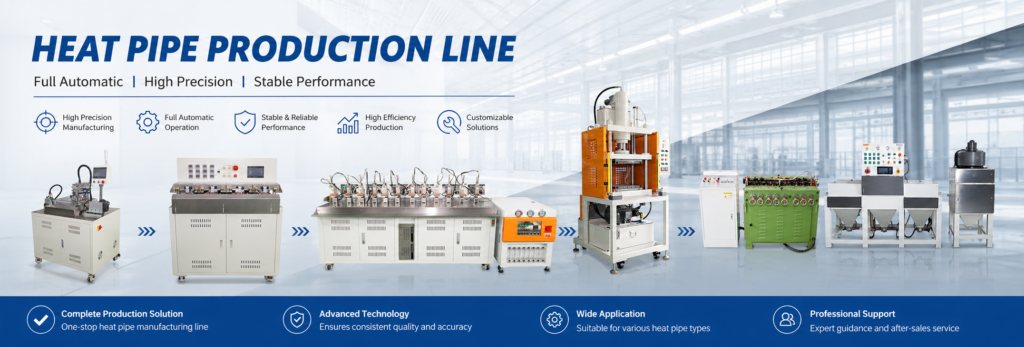
- Heat Pipe Manufacturing Line
- Automatic Heat Pipe Production Line
- Heat Pipe Making Machine
- Heat Pipe Powder Filling Machine
- Heat Pipe Degassing Machine
- Heat Pipe Vacuum Pumping Machine
- Heat Pipe Charging Machine
- Heat Pipe Sealing Machine
- Heat Pipe Testing Machine
Copper Tube Processing Equipment
Common machines include:
- Copper Tube Cutting Machine
- Tube Straightening Machine
- Tube Bending Machine
- Tube Forming Machine
- Tube Processing Machine
Guidelines for Picking Between Heat Pipe and Copper Tube
Manufacturers should evaluate application requirements.
Choose Heat Pipe When:
- Heat density is high
- Cooling efficiency is critical
- Space is limited
- Passive cooling is required
Choose Copper Tube When:
- Heat transfer distance is short
- Cost control is important
- Simple structure is preferred
- Fluid transportation is needed
Consider Combined Solutions
Many thermal systems combine:
- Copper tubes
- Heat pipes
- Heat sinks
- Vapor chambers
This approach provides optimized performance.
Why Choose Nanjing Bangwin Machine
Nanjing Bangwin Machine specializes in heat pipe manufacturing equipment and thermal production solutions.
Official website:
Nanjing Bangwin Machine Official Website
Our equipment solutions include:
- Heat Pipe Manufacturing Line
- Automatic Heat Pipe Production Line
- Heat Pipe Equipment
- Heat Pipe Making Machine
- Heat Pipe Powder Filling Machine
- Heat Pipe Vacuum Pumping Machine
- Heat Pipe Charging Machine
- Heat Pipe Sealing Machine
- Heat Pipe Testing Machine
- Copper Tube Processing Equipment
We also supply production systems to meet customer specifications.
Home
Our services include:
- Production line design
- Equipment manufacturing
- Installation support
- Technical training
- After-sales service
FAQ
- What is the main difference between heat pipe and copper tube?
A heat pipe transfers heat through phase-change circulation, while a copper tube transfers heat through direct conduction.
- Is a heat pipe better than a copper tube?
For high-performance cooling applications, heat pipes usually provide better thermal transfer efficiency.
- Why do heat pipes use copper tubes?
Copper provides excellent thermal conductivity, corrosion resistance, and compatibility with working fluids.
- Are copper tubes cheaper than heat pipes?
Yes. Copper tubes usually have lower manufacturing costs because their structure is simpler.
- Can copper tubes and heat pipes work together?
Yes. Many cooling systems combine copper tubes, heat pipes, and heat sinks.
- Which industries use heat pipe manufacturing equipment?
Electronics, AI servers, EVs, aerospace, telecommunications, and industrial cooling industries use heat pipe production equipment.
Conclusion
The optimisedcondition is therenegative heat-pipe thermal-conditions, A comparative analysis ofHeat Pipe vs Copper Tube based on thermalrequirements and application conditions.
Copper tubing is widely used for its cheap and reliable heat conduction. On the other hand, heat pipes have much higher heat transfer performance due to their phase-change type characteristics.
When compact size and high performance thermal solution requirements are required from the manufacturers, for more advanced applications heat pipes provide better efficiency.
Founded in 2008, Nanjing Bangwin Machine offers a full range of heat pipe manufacturing equipment: automatic production line, vacuum system, filling machine, sealing equipment and testing solutions.
Visit:
Nanjing Bangwin Machine Official Website