1. Light Pole Fabrication Process Introduction
Light poles hold lighting systems high above streets, highways, parking lots, parks, and factories.
Steel Pole Fabrication Line
As a result, light pole manufacturers must have a reliable fabrication process. It produces strong and durable light pole structures.
Light Pole Fabrication Process
The Light Pole Fabrication Process includes multiple key metalworking operations. First, manufacturers typically begin with steel plate preparation.
Next, they cut, bend, and form the steel plate. Afterward, they weld the steel pole at the longitudinal seam.
Then, the manufacturers straighten and finish the light pole. Finally, they apply surface protection before finishing inspection.
Connecting each process with adequate automation creates an efficient Light Pole Production Line.
As a result, light pole manufacturers can boost productivity. Furthermore, they can ensure consistent product quality.
Nanjing Bangwin Machine is a supplier of metalworking machinery. We also offer turnkey production solutions for light pole fabrication.
Nanjing Bangwin Machinery Official Website
2. What Is Light Pole Fabrication Process?
Light Pole Fabrication Process transforms steel plate into complete lighting poles.
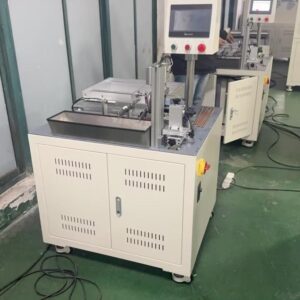
Steel Plate Cuting Machine
The full process may look as follows:
Steel Selection -> Plate Cutting -> Plate Forming -> Pole Forming -> Longitudinal Welding -> Straightening -> Head Processing -> Grinding -> Surface Treatment -> Inspection
Each phase has a unique role in the process. For instance, plate cutting determines initial geometry.
The pole forming process gives the metal the necessary shape. Later, welding fuses the longitudinal edges together.
Finally, surface treatment prevents damage from outdoor elements.
As such, each phase needs appropriate machinery and process controls.
3. Light Pole Fabrication Process Step by Step
Step 1: Select the Steel Material
Before manufacturers can start fabrication, they need material.
Carbon steel remains the common material for light poles.
However, the chosen material must meet strength requirements.
Take into account these factors:
- Material grade
- Plate thickness
- Height of pole
- Wind load
- Environmental conditions
Extra wind load or height may require thicker steel plates.
As such, designers should determine these criteria before fabrication.
Step 2: Prepare the Steel Plate
Once a material is selected, manufacturers can move to visual inspection and preparation.
Check the following:
- Thickness of the plate
- Surface condition
- Plate dimensions
- Material quality
Clean and satisfactory plates ensure better results.
Steel plate preparing machine
Step by step
Step 3: Cut the Steel Plate
Steel plate shearing machine
Cutting the steel plate shapes the starting geometry of the pole.
A Plate Trapezoid Shearing Machine produces appropriate plate shapes. These machines work well for tapered light poles.
The machine also needs to cut with precision. Improper cutting dimensions cause issues in later processes.
Good cutting improves:
- Final pole geometry
- Material usage
- Forming quality
- Welding quality
As such, manufacturers should ensure high-quality cutting precision.
Internal Link Keyword: Plate Trapezoid Shearing Machine
Step 4: Bend the Steel Plate
Once the plate is cut to size, manufacturers must bend it.
Bending slowly shapes the flat steel plate.
Depending on the final design, here are some bending options:
- Hydraulic Bending
- Press Brake Forming
- Plate Rolling
- Axial Bending
The right choice depends on the light pole’s cross-section.
Polygonal poles need accurate forming at various positions along the length.
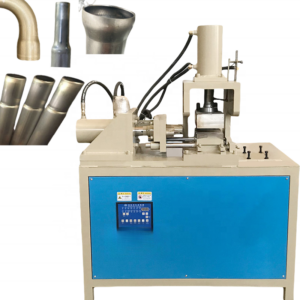
Inner Diameter Pipe Expanders
As such, manufacturers should match the equipment to their product’s design.
Step 5: Form the Pole Body
During forming, the structure takes on its final cross-sectional shape.
A Horizontal Hydraulic Axial Forming Machine exerts precise hydraulic pressure.
The machine slowly forms a flat steel plate into a pole with a polygonal or tapered shape.
Examples of pole shapes include:
- Octagonal
- Polygonal
- Conical
- Tapered
Accuracy in forming ensures consistent dimensions between poles.
Accurate forming also helps with the quality of welding.
Horizontal Hydraulic Axial Forming Machine
Step 6: Weld the Longitudinal Seam
Welding joins the two longitudinal edges together.
This weld forms the primary structural connection.
Using an Automatic Welding Machine improves weld consistency.
Automated welding also decreases human effort in repetitive operations.
Here are some critical welding parameters:
- Welding current
- Speed of welding
- Wire feeding speed
- Position of welding
As such, you should always weld under stable parameters.
Step 7: Straighten the Pole
Due to forming and welding, you may encounter some deformation.
You may need to straighten the light pole after welding.
Straightening corrects:
- Upward and downward bending
- Angular distortion
- Local deformations
A straight pole ensures accuracy during installation.
Plus, your final product looks better as a result.
Step 8: Process the Pole Head
Depending on the pole design, you will need to process the top of the pole.
Examples of light pole heads include:
- Single arm
- Double arm
- Curved arm
- Straight arm
- Multi-arm structures
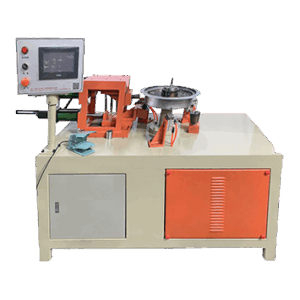
A Pole Head Bending Machine lets you angle the pole arms.
On the other hand, you can use a Pipe Head Shrinking Machine. This equipment shrinks the diameter of chosen pipe sections.
Couple these two machines together to create any pole head configuration.
- Pole Head Bending Machine
- Pipe Head Shrinking Machine
Step 9: Grind the Weld Seam
Optionally, you can grind down the weld seam.
Grinding the seam removes:
- Extra weld material
- Sharp edges
- Surface imperfections
The pole now has a smooth surface.
As a result, your chosen coating process works better.
However, you do not want to grind too much material away.
If you remove too much material, you weaken the weld connection.
Step 10: Apply Surface Treatment
Light poles exist outdoors. As a result, they encounter moisture and weather.
Plus, corrosion seriously weakens metal structures.
Common surface treatments include:
- Hot-Dip Galvanizing
- Powder Coating
- Paint
Hot- dip galvanizing puts a layer of zinc on the pole.
Galvanizing provides excellent corrosion resistance.
Powder Coating allows for extra protection. Furthermore, you can create a more attractive finish.
You can also paint the light pole if you want a customized finish.
As a result, manufacturers should apply treatment based on the environment.
Step 11: Inspect the Finished Pole
The final step of light pole fabrication involves quality inspection.
Here are some criteria to check:
- Length
- Diameter
- Wall thickness
- Straightness
- Weld quality
- Flange size
- Mounting holes
- Surface
Inspection lets manufacturers ensure consistent quality.
4. Materials Used for Light Pole Fabrication
Steel provides the base material for most traditional light poles.
Carbon Steel
Carbon steel offers:
- High strength
- Formability
- Cost-effectiveness
- Wide availability
For these reasons, it sees wide use in street light and highway lighting.
Galvanized Steel
Galvanized steel has a stronger resistance to corrosion.
It works well in outdoor settings as a result.
Aluminum
Aluminum is lightweight when compared to steel.
The trade-off is that aluminum needs different fabrication methods.
Manufacturers must equip themselves to work with their chosen material.
5. Main Machines for Light Pole Fabrication
Light pole fabrication can involve several different machines.
Plate Trapezoid Shearing Machine
This machine cuts your steel plates into the correct shape.
Ideal for efficient production of tapered light poles.
Horizontal Hydraulic Axial Forming Machine
This machine forms your flat steel plate into poles.
It may create polygonal or tapered shapes.
Automatic Welding Machine
This machine automates the welding of your longitudinal seam.
Helps ensure stable and efficient production rates.
Pole Head Bending Machine
Use this machine to form specific angles on lighting poles.
Create any pole design you need with this machine.
Pipe Head Shrinking Machine
Looking to reduce the diameter of specific pipe sections?
This machine can take care of that task.
Straightening Machine
Deformation can occur during forming and welding.
Use this machine to correct deformation and improve straightness.
6. Automatic Light Pole Fabrication
Light pole manufacturers are increasingly turning to automation.
An automated light pole fabrication system can include:
- Plate feeding
- Cutting
- Positioning
- Forming
- Welding
- Straightening
- Material handling
- Inspection
Manufacturers can reduce the amount of manual labor.
Automated light pole fabrication also increases consistency.
Advantages of Automation
Increased Production Efficiency
Machines can complete repetitive tasks faster.
Factories can produce more poles as a result.
Higher Consistency
Automated equipment maintains set processing parameters.
As a result, every light pole shows uniform dimensions.
Reduced Labor Needs
Compared to manual labor, automation reduces busy work.
Factories can reallocate human workers as a result.
Safer Working Conditions
Automated material handling reduces manual lifting.
Production Monitoring
Many modern systems can track production.
Operators can catch issues with production quickly.
7. Factors That Affect Fabrication Quality
Material Quality
Cheap or poor-quality material can compromise strength and longevity.
Solution: Manufacturers should inspect and analyze incoming steel materials.
Cutting Accuracy
Improper plate dimensions can create problems during forming.
Solution: Cutting equipment should include precise movement controls.
Forming Accuracy
Improper forming can cause inconsistencies in pole geometry.
Solution: Hydraulic forming systems should apply consistent pressure.
Welding Quality
The longitudinal weld creates the main structural connection on light poles.
Solution: Welding parameters should be closely monitored and controlled.
Straightness
Light poles with bend marks will have installation issues.
Solution: Manufacturers should include a straightening step if necessary.
Surface Treatment
Outdoor lighting poles require adequate corrosion-resistant protection.
Solution: Manufacturers should understand which coating processes work best.
8. How to Improve Light Pole Production Efficiency
Use Integrated Production Equipment
Connecting different stages with a Light Pole Manufacturing Line allows for more efficient material movement.
Solution: Choose factory equipment that can connect to a complete production line.
Increase Automation
Automatic cutting, forming, welding, and handling equipment can decrease repetitive manual labor.
Solution: Factories should increase their use of automated equipment where possible.
Improve Material Utilization
Equipment that cuts plates with precision will produce less waste.
Solution: Reduce excess material use by investing in high-quality cutting equipment.
Optimize Factory Layout
Position machinery and work areas according to the production sequence.
One recommended layout is: Material Storage → Cutting → Forming → Welding → Straightening → Finishing → Surface Treatment → Inspection
Solution: A factory layout that reflects the production flow will limit unnecessary material movement.
Use Suitable Machine Capacity
Manufacturers should consider equipment load limits when choosing fabrication equipment. Factors include:
Steel thickness
Pole diameter
Pole length
Expected production volume
Solution: Machines should operate within their ideal working ranges.
9. Why Choose Nanjing Bangwin Machine?
Nanjing Bangwin Machine specializes in industrial machinery and customized manufacturing solutions. With a primary focus on metal fabrication equipment, the company offers several machines that connect to form light pole production lines.
Machines used in the Light Pole Fabrication Process include:
Plate Trapezoid Shearing Machine
Horizontal Hydraulic Axial Forming Machine
Automatic Welding Machine
Pole Head Bending Machine
Pipe Head Shrinking Machine
Straightening Machine
Nanjing Bangwin Machine can also provide customized equipment configurations according to customer needs. Some factors that change equipment specifications include:
Pole dimensions
Steel thickness
Desired production capacity
Level of automation needed
Factory layout
Solution: Customers can receive a manufacturing system that fits their particular production requirements.
Visit Nanjing Bangwin Machine Official Website to learn more about the company and its equipment.
11. FAQ
- What is the Light Pole Fabrication Process?
The process includes steel preparation, cutting, bending, forming, welding, straightening, head processing, surface finishing, and inspection.
- What material do manufacturers use for light poles?
Manufacturers commonly use carbon steel.
However, some applications may use galvanized steel or aluminum.
- What machine cuts steel plates for light pole fabrication?
A Plate Trapezoid Shearing Machine can cut steel plates into suitable shapes for tapered light poles.
- What machine forms light poles?
A Horizontal Hydraulic Axial Forming Machine can form steel plates into polygonal and tapered structures.
- Why is longitudinal welding important?
Longitudinal welding connects the formed steel plate and creates the main structural seam.
Therefore, manufacturers need stable welding parameters.
- Can manufacturers automate the light pole fabrication process?
Yes.
Manufacturers can integrate cutting, forming, welding, straightening, and handling equipment into an automated production system.
- What surface treatment do light poles need?
Common treatments include hot-dip galvanizing, powder coating, and painting.
The best option depends on the installation environment.
- Can Nanjing Bangwin Machine provide light pole fabrication equipment?
Yes.
Nanjing Bangwin Machine provides relevant metalworking equipment and customized production solutions.
You can learn more through its official website:
12. Conclusion
The Light Pole Fabrication Process includes steel preparation, plate cutting, bending and forming, welding, straightening, pole head processing, grinding, surface treatment, and inspection.
By completing each stage with proper equipment and closely monitoring the process, manufacturers can create high-quality light poles.
Furthermore, light pole fabrication can be streamlined with a connected production line. Machinery and equipment can integrate to improve part movement, reduce material waste, and limit production steps.
Light pole automation can increase productivity and consistency while improving worker safety.
Nanjing Bangwin Machine is a valuable resource for manufacturers building new light pole production facilities.
Check out Nanjing Bangwin Machine Official Website for more information about the company’s services.