
1. What Is Vapor Chamber Cooling Technology?
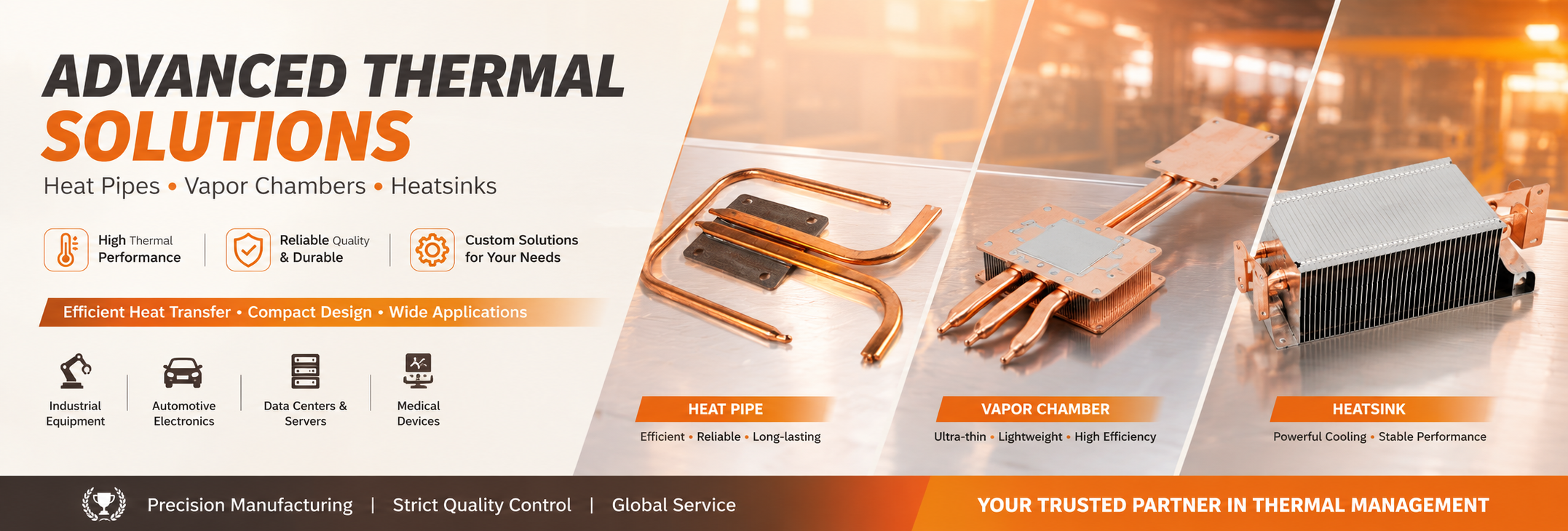
Vapor Chamber Cooling Technology spreads and transports heat using phase-change heat transfer.
A vapor chamber includes:
A sealed internal cavity
A small amount of working fluid inside the cavity
A capillary wick structure inside the cavity
A chamber body typically made of copper
Copper provides very good thermal conductivity for heat transfer.
When heat is applied to the vapor chamber, the liquid evaporates. The vapor travels to cooler regions where it condenses, releasing heat. The condensed liquid is wicked back toward the heat source and evaporates again.
Since there are no moving parts, this process can continue indefinitely.
A vapor chamber can efficiently spread heat over a relatively large area.
This efficient heat transfer method has found application in many compact high-performance electronic devices.
2. How Does Vapor Chamber Cooling Technology Work?
Evaporation of the liquid absorbs heat
Movement of the vapor transfers heat
Condensation releases heat
The wick returns liquid to the evaporator area
The entire process can continue without mechanical pumping.
Here are the four basic stages of vapor chamber cooling:
Stage 1: Heat is applied to one area of the vapor chamber
The liquid working fluid absorbs heat and begins to evaporate
Stage 2: Vapor movement
The generated vapor spreads throughout the interior of the chamber
Stage 3: Condensation
When the vapor reaches a cool region, it condenses and gives up heat
Stage 4: Liquid return
Liquid is wicked back to the heat source where it can repeat the cycle
Vapor chambers passively transfer large amounts of heat by using this simple cycle.
3. Main Components of a Vapor Chamber
Four main components make up a typical vapor chamber.
Copper Chamber
The copper chamber forms the outer casing of the vapor chamber. It also serves as a heat spreader.
Thin copper sheets make manufacturing these chambers ideal for slim products.
Wick Structure
The wick creates capillary pressure and moves the liquid back toward the evaporator.
Some common wick structures include:
- Sintered copper powder
- Copper mesh
- Grooved structure
- Composite wick structure
Working Fluid
A working fluid transfers heat via phase changes from liquid to vapor. Water is a common working fluid for electronics. However, the working fluid can vary based on the electronics and heat transfer requirements.
Sealed Vacuum Cavity
The sealed vacuum cavity contains a small amount of controlled vacuum. This allows the working fluid to boil at lower temperatures.
4. Vapor Chamber Cooling Process
Heat Source → Evaporation → Vapor Spreading → Condensation → Liquid Return → Repeat
The process sounds simple enough. However, creating a vapor chamber that works reliably requires great precision.
Vapor chambers transfer heat using phase change instead of solid conduction.
Because of this, they can spread heat very quickly.
They can also help reduce hot spots in electronic devices.
5. Why Vapor Chambers Provide Efficient Cooling
Below are several reasons why vapor chambers are so effective at spreading heat.
Large Heat Spreading Area
Because a vapor chamber spreads heat in two dimensions, it covers a larger surface area.
Low Thermal Resistance
Since vapor chambers transfer heat via phase-change, they have very low thermal resistance.
Passive
There are no moving parts in a vapor chamber.
Compact
Vapor chambers can be made extremely thin.
Flexible Design
Manufacturers can design vapor chambers to fit many different form factors and heat source layouts.
6. Vapor Chamber vs Traditional Cooling Methods
Comparison of cooling approaches
Cooling Method Heat Transfer Heat Spreading Moving Parts Typical Use
Vapor chamber Phase change Excellent No Electronics
Copper plate Conduction Moderate No Basic cooling
Heat pipe Phase change Mainly linear No Electronics
Air cooling Convection Limited Usually fan Computers
Liquid cooling Convection High Pump required High-power systems
A vapor chamber uses phase-change to both absorb heat and transport it to a cooler region.
Heat pipes also transport heat via phase change.
However, heat pipes generally spread heat only in a linear direction.
Vapor chambers spread heat across a 2D surface.
7. Types of Vapor Chamber Cooling Structures
The type of internal structure varies depending on the application.
Sintered Wick Vapor Chamber
Sintered powder forms the wick structure.
Mesh Wick Vapor Chamber
Copper mesh forms the liquid-returning wick structure.
Grooved Vapor Chamber
Grooves assist in moving liquid from the cooler region to the heat source.
Composite Wick Structure
Some vapor chambers use more than one wick structure.
The best wick structure depends on the heat load, heat flux, thickness, orientation, operating temperature, and available manufacturing processes.
8. Vapor Chamber Cooling Applications
Below are some common vapor chamber cooling applications.
Smartphones
Processors in smartphones need to transfer heat out of very small spaces.
By spreading heat across a larger area, vapor chambers help to improve the operating temperature of the device.
Gaming Laptops
Video games and simulations can create significant heat in a laptop.
Heat must be spread away from the processor and GPU to help cool these components.
Vapor chambers used in tandem with fans and heat sinks help transfer heat more effectively.
Graphics Cards
Graphical processing units, or GPUs, can produce large amounts of heat in a small area.
Spreading the heat over a larger area allows heat to be transferred more easily.
Servers
Server processors and CPUs create a lot of heat as well. Vapor chambers can help spread that heat across a larger area.
This allows for more effective cooling when used in combination with heat sinks.
LED Lights
High-power LEDs also generate a lot of heat. Since the heat is generated in a small die, it is important to spread that heat.
Vapor chambers can help spread the heat out over a larger area.
Automotive
Cars and trucks have lots of electronics including power modules, battery controllers, and more. Vapor chambers can help spread heat out in these applications.
Communications Equipment
Data centers, cell towers, and other communications equipment benefit from reliable cooling methods.
Since vapor chambers work passively, they are great at spreading heat over a larger area.Vapor Chamber Cooling Technology Guide
9. Advantages of Vapor Chamber Cooling
Vapor chamber cooling comes with many real-world benefits:
1. Superior heat spreading
Because vapor chambers spread heat in two planes, they are ideal for use with concentrated heat loads.
2. Small form factor
Thin vapor chambers can be placed inside small electronic packages.
3. Passive
Vapor chambers don’t require pumps. As a result, the thermal design remains relatively simple.
4. High performance
Thanks to phase change heat transfer, vapor chambers can achieve impressive heat-transfer capabilities.
5. Low maintenance
Because vapor chambers have no moving parts, they require little maintenance over their lifetimes.
6. Design flexibility
Engineers can produce custom vapor chambers to any dimension or thickness. Designers can also tailor vapor chambers to any device form factor.
7. Better temperature uniformity
Heat spreading allows vapor chambers to minimize localized heating. As a result, components can operate under more consistent temperatures.
10. Vapor Chamber Performance Considerations
Liquid cooling heat transfer relies on several key factors:
Wick
The wick structure determines capillary pressure and affects liquid circulation rate. Therefore, designers must choose a wick that is compatible with their heat load.
Working fluid
The working fluid should have suitable boiling characteristics for the intended operating temperature range. Water is suitable for most electronics cooling applications. However, other liquids can work well for extreme conditions.
Vacuum
Non-condensable gases can inhibit vapor circulation. As a result, manufacturers must ensure their chambers are properly vacuum pumped and degassed.
Thickness
Thinner vapor chambers allow for smaller form factors. However, extremely thin vapor chambers create additional manufacturing challenges.
Heat source
The size of the evaporator surface impacts local heat flux. Designers should customize their wick structure around their heat source geometry.
Condenser size
Increasing the condenser size can increase heat spreading capabilities. As a result, vapor chamber geometry should be tailored to the intended cooling solution.
Manufacturing precision
Poor manufacturing can ruin an otherwise excellent vapor chamber design. As a result, forming, cleaning, filling, vacuuming, and sealing procedures all require tight process control.
11. Vapor Chamber Production Requirements
Precision manufacturing is critical for successful vapor chamber production. The typical vapor chamber production process involves the following steps:
Copper preparing → Chamber forming → Surface cleaning → Wick structure → Chamber assembling → Working fluid filling → Vacuum pumping → Degassing → Laser sealing → Hot pressing → Thermal test → Leak test
Many variables affect vapor chamber performance. For instance, surface contamination can damage internal chamber surfaces. Similarly, too much or too little filling fluid can limit thermal performance. Improper sealing can cause leakage. As such, manufacturers require stable production equipment to ensure reliable products.
Vapor Chamber Production Process
12. Vapor Chamber Manufacturing Equipment
Complete production of vapor chambers typically involves several machines.
Vapor Chamber Forming Machine
This machine forms the base geometry of the vapor chamber.
Wick Manufacturing Machine
This system forms the internal capillary wick structure.
Vacuum Pumping Machine
The vacuum pump system evacuates non-condensables from the chamber.
Fluid Filling Machine
This machine ensures correct filling-fluid quantity goes into each vapor chamber.
Laser Sealing Machine
Laser welding creates a sealed chamber.
Hot Press Hydraulic Machine
The hydraulic hot press controls thickness.
Testing Machine
Testing systems ensure parts are within tolerance for leakage, dimensions, and thermal performance.
Manufacturers can automate these machines with an assembly line for large-volume production runs.
13. Selecting a Vapor Chamber
When engineers approach vapor chamber cooling solutions, they should consider more than just conductivity. Here are some important things to consider:
- Thermal load
- Heat source size
- Installation dimensions
- Operating temperature
- Chamber thickness requirements
The following factors can influence vapor chamber selection:
- Thermal power
- Heat flux
- Chamber size
- Chamber thickness
- Wick structure
- Working fluid
- Operating temperatures
- Installation orientation
- Overall cooling system design
Of course, manufacturing capabilities come into play when discussing mass production. What works in prototyping may not scale to high-volume production. As a result, engineers should consider both design and producibility when working with vapor chambers.
14. Vapor Chamber Cooling: Future Developments
Electronic devices aren’t getting any smaller or slower. As a result, thermal management is only becoming more challenging for engineers.
Future vapor chamber technology will likely see these trends:
- Ultra-thin vapor chambers
Already manufacturers are producing vapor chambers less than 1mm thick. These chambers help cool everything from smartphones to tablets to laptops.
- Increased heat flux
Power-hungry processors are becoming standard. To spread this heat, manufacturers need greater heat-transfer capabilities. Innovations to wick design can allow better heat spreading.
- Automations
Automated filling, vacuum, sealing, and testing can reduce human error and improve part consistency.
- Advanced wick structures
Innovative wick designs can allow for faster capillary action and improved thermal performance.
- Custom geometry
As more parts require customized heat spreading, vapor chamber geometry will become more specialized.
- Integration with other thermal systems
Vapor chambers don’t have to be used alone. They can work with heat sinks, heat pipes, fans, and liquid cooling. As a result, we will likely see more integration between cooling technologies.
15. Why Choose Nanjing Bangwin Machine?
Producing vapor chambers requires stable and precise manufacturing. Nanjing Bangwin Machine specializes in industrial manufacturing equipment and vapor chamber production lines.
The company offers manufacturing equipment for many precision engineering applications. Bangwin Machinery can also provide valuable customization when it comes to vapor chamber production. By networking machines correctly, manufacturers can improve process stability and limit manual transport. Whenever possible, engineers should consider equipment configuration to maximize production efficiency. Custom equipment configurations allow manufacturers to tailor their production lines to specific designs and production volumes.
Learn More:
Home
16. FAQ
l What is vapor chamber technology?
Vapor chamber technology functions by spreading heat. It does this through the use of evaporation and condensation.
l How does vapor chamber work?
A vapor chamber works by producing vapor at the heat source. The vapor then condenses back into liquid on the opposite side of the chamber.
l Is Vapor Chamber better than heat pipe?
Heat pipes and vapor chambers serve different purposes. Heat pipes are great for 1D heat spreading. Vapor chambers are better at spreading heat in 2 dimensions.
l What liquid is in a vapor chamber?
Water can be used as the liquid in a vapor chamber.
l Does a vapor chamber need a pump?
No. Vapor chambers use capillary action to return liquid to the heat source.
l How does a vapor chamber cool?
A vapor chamber cools by evaporating liquid at the heat source. Vapor then travels to the opposite side of the chamber. It releases its heat energy before returning to liquid form.
l What is used to make vapor chambers?
Vapor chambers are typically made from copper. Copper mesh or powder is often used to make the wick.
l Factors affecting Vapor chamber?
Wick structure, working fluid, thickness, vacuum level, heat source geometry, and condenser size all affect vapor chamber cooling performance.
l Can vapor chambers be thin?
Vapor chambers can be made very thin. However, the thinner the vapor chamber, the more difficult it is to manufacture.
l Where are vapor chambers used?
Vapor chambers are used in a variety of applications, such as:
- Smartphones
- Laptops
- Graphics cards
- Servers
- LED lighting
- Automotive
- Communication devices
l What machines are used to produce vapor chambers?
A vapor chamber production line can include the following machines:
- Vapor Chamber Forming Machine
- Wick Manufacturing Machine
- Vacuum Pumping Machine
- Fluid Filling Machine
- Laser Sealing Machine
- Hot Press Hydraulic Machine
- Test Machine
17. Conclusion
Vapor chamber cooling technology serves as an effective solution to modern cooling needs. Vapor chambers use phase change to absorb heat, spread heat load, and release heat through condensation. As a result, vapor chambers are great for reducing hot spots and improving temperature uniformity. Not only this, but vapor chamber cooling is passive and can fit inside small spaces. However, vapor chamber cooling performance is influenced by a variety of factors. From engineering design to production issues, many variables can impact the performance of a vapor chamber. As electronics continue to increase in power while decreasing in size, vapor chamber cooling technology will play an increasingly large role in thermal management solutions. A reliable Vapor Chamber Production Line ensures manufacturers can create consistent vapor chambers at scale.
相关文章:
 Heat Pipe Production Line Price: Complete Cost Guide for Heat Pipe Manufacturing Equipment
  Space-Saving Flexible Metal Hose Machine for Efficient Hose Manufacturing
  Flexible Duct Machine for High-Efficiency HVAC Duct Manufacturing
  Automatic Tube Shrinking Machine | Precision Tube End Reducing System