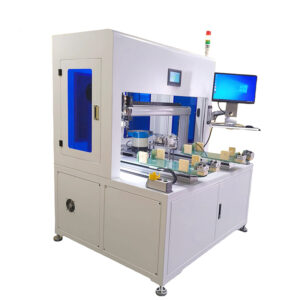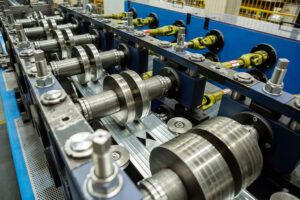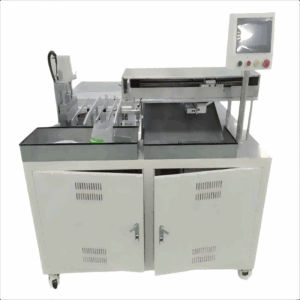
A Heat Exchanger Production Line combines the machines, tooling, material handling systems, and inspection equipment needed to manufacture heat exchanger components or finished assemblies. Its configuration depends on the exchanger design, production volume, material specifications, required tolerances, and automation goals. For HVAC and refrigeration applications, manufacturers may integrate fin forming, tube cutting, tube bending, expansion, coil assembly, and testing into a coordinated workflow.
What Is a Heat Exchanger Production Line?
A Heat Exchanger Production Line is a coordinated manufacturing system that processes materials into heat exchanger components or finished products. It may contain standalone machines, connected workstations, automated transfer systems, or a combination of these arrangements.
The required configuration depends on the product. An HVAC coil line may process copper tubes, aluminum fins, and headers. A plate heat exchanger line may focus on sheet feeding, pressing, trimming, stacking, and assembly. Meanwhile, a shell-and-tube exchanger requires different equipment for shell fabrication, tube-sheet machining, tube preparation, joining, and inspection.
Therefore, manufacturers should define the target product before purchasing machinery. A line designed for air conditioner coils may not suit industrial shell-and-tube equipment. Likewise, a plate-forming system cannot replace tube-processing equipment when the product requires bent tubes.
A well-planned Heat Exchanger Production Line connects each manufacturing operation according to part dimensions, processing requirements, and downstream assembly needs.
Which factors determine the line configuration?
Four factors influence the initial design.
- Product type:Determine whether you manufacture fin-and-tube coils, microchannel exchangers, plate exchangers, or other designs.
- Production volume:Establish expected output per shift, operating hours, and annual demand.
- Product variety:Identify tube diameters, fin dimensions, coil geometries, and changeover frequency.
- Quality requirements:Define dimensional tolerances, leak testing, pressure testing, and required documentation.
These inputs help engineers select suitable machinery and determine how to connect the stations.
What Equipment Does a Production Line Need?
The equipment list should follow the manufacturing route rather than a standard package. An HVAC coil line typically requires several tube-processing and fin-processing operations, while other exchanger designs need different equipment.
1. Fin forming equipment
Fin-forming equipment converts metal strip into the shapes required by a heat exchanger design. Manufacturers commonly use aluminum or other specified materials for fin production.
A fin press line may include decoiling, feeding, a press, dedicated tooling, and a collection system. The die determines fin geometry, collar dimensions, hole positions, and other critical features.
Manufacturers should confirm material thickness, strip width, fin pitch, hole patterns, and required output before selecting the press. Tooling compatibility matters because an unsuitable die can create dimensional defects and unnecessary scrap.
For suitable fin-forming applications, review the Plate Fin Press Forming Machine.
2. Tube straightening and cutting equipment
Tube preparation establishes the required length and geometry before bending or assembly. A tube straightening and cutting machine processes incoming tube stock into consistent sections.
Depending on the application, the equipment may handle copper or aluminum tubing. Manufacturers should confirm tube diameter, wall thickness, material condition, straightness, cut length, and end-quality requirements.
Cutting accuracy affects downstream bending and assembly. Burrs, distorted ends, or inconsistent lengths may create fitting problems and increase rework.
Explore the Copper Tube Straightening and Cutting Machine for a relevant tube-preparation application.
3. Tube bending and return-bending equipment
Tube bending creates the geometry required by the heat exchanger design. HVAC and refrigeration manufacturers often need repeatable bends to arrange tubes within compact coil assemblies.
A U-bend or return-bending machine forms a 180-degree bend that connects straight tube sections into a continuous flow path. Correct bending helps maintain the required center distance, bend radius, and overall component dimensions.
However, the machine must match the tube material, diameter, wall thickness, and specified geometry. Manufacturers should also evaluate springback, deformation, surface damage, and tooling changeover.
For this operation, see the Heat Exchanger U Shape Copper Tube Return Bending Machine.
4. Tube expansion and coil assembly equipment
Many fin-and-tube heat exchangers require tubes to make effective thermal contact with the surrounding fins. Depending on the design, manufacturers may use mechanical or other specified expansion methods.
Expansion equipment must match the tube geometry, fin stack, and required tube-to-fin contact. Excessive or insufficient expansion can affect assembly quality and heat-transfer performance.
After expansion, workers or automated systems may complete coil forming, header installation, joining, and other assembly operations. The actual sequence depends on the product design.
5. Header processing and end-forming equipment
Headers distribute fluid among multiple tubes in applicable exchanger designs. Their production may require cutting, hole punching, slotting, end forming, and other tube-processing operations.
The required machine combination depends on header geometry, tube arrangement, connection design, and production volume. A dedicated workcell can combine several operations to reduce manual transfers between stations.
For example, New Donor Machinery’s website lists an Air Conditioner A/C Copper Header Pipe Production Line Workcell. The product page describes an automated copper or aluminum tube-processing workcell for air conditioning and refrigeration applications.
6. Inspection and testing equipment
Inspection equipment verifies component dimensions and finished-product requirements. Depending on the exchanger type, manufacturers may need dimensional gauges, vision inspection, leak testers, pressure-testing equipment, and thermal performance instruments.
Not every production line needs every testing device. The engineering team should define inspection requirements according to the design, applicable standards, and customer specification.
A production-line quotation should identify which tests the equipment performs and which remain separate factory operations.
How Does the Production Workflow Operate?
A typical HVAC fin-and-tube manufacturing workflow starts with material preparation and ends with inspection and packaging. Manufacturers should adapt the sequence to the product drawing and selected joining method.
Step 1: Prepare and verify materials
First, inspect incoming tube stock, fin material, headers, and other components. Confirm the material grades, dimensions, surface condition, and relevant certificates.
Next, organize materials by product specification. Clear identification reduces the risk of mixing different sizes or grades during production.
Step 2: Form the fins
Feed the specified metal strip into the fin press system. The press and tooling create the required fin geometry.
Inspect hole positions, fin pitch, collar dimensions, and surface condition. Correct defects before the fin stack moves downstream.
Step 3: Cut and bend the tubes
Prepare tubes to the specified length, then create the required bends. Some products use straight tubes and return bends, while others require hairpin shapes or more complex geometries.
Check the finished parts against approved drawings. Pay particular attention to bend radius, center distance, tube length, and deformation.
Step 4: Assemble tubes and fins
Arrange the tubes and fins according to the approved coil design. Use suitable fixtures to maintain alignment and spacing.
Where the design requires tube expansion, control the process to achieve the specified contact between the tubes and fins. Inspect representative assemblies before proceeding.
Step 5: Install headers and complete joining
Fit headers and connections according to the product drawing. Apply the specified welding, brazing, mechanical joining, or other approved method.
The joining process must suit the material and operating conditions. Follow the approved procedure and inspection requirements rather than applying one method to every product.
Step 6: Inspect and test the finished assembly
Verify dimensions, joint quality, cleanliness, and other specified acceptance criteria. Perform leak, pressure, or thermal performance testing when the design and contract require those checks.
For single-phase heat exchangers, ASME PTC 12.5 provides methods for evaluating parameters such as heat-transfer rate and pressure drop. The applicable test method depends on the product and contractual requirements.
Step 7: Package and record the finished products
After acceptance, record the required inspection results and product identification. Protect tubes, fins, connections, and other vulnerable components during handling and shipping.
Maintain traceability where the specification requires it. Consistent records also help manufacturers investigate defects and improve future production runs.
How Should You Plan Automation and Factory Layout?
Automation should solve a defined production problem. A manufacturer should identify bottlenecks, material movement, repetitive handling, and quality risks before investing in connected machinery.
Match the automation level to production demand
Manual workstations may suit prototypes, small batches, or products with frequent design changes. Semi-automatic equipment can improve consistency while retaining operator flexibility. Integrated automation may suit stable, repetitive production with sufficient demand.
A Heat Exchanger Production Line can use independent machines, linked workstations, or robotic transfer. The best choice depends on the required output, product mix, available floor space, and investment budget.
Design the material flow
Arrange stations in the order of processing wherever practical. Keep raw materials, work-in-progress, finished products, and rejected components clearly separated.
Consider operator access, tooling changes, maintenance clearance, safety guarding, and material replenishment. A compact layout is not necessarily an efficient layout if it creates congestion or restricts maintenance.
Evaluate line balancing and bottlenecks
The slowest operation often limits total line output. For example, a high-speed fin press cannot guarantee equivalent finished-coil output if bending, assembly, or testing takes longer.
Measure the cycle time of each critical station. Then identify whether additional tooling, parallel workstations, automatic transfer, or process changes could improve the overall flow.
Do not estimate line capacity by adding individual machine specifications together. Calculate realistic output using the complete production sequence, planned operating hours, changeovers, and expected downtime.
Plan for future product changes
New product models may require different dies, tube lengths, bend radii, or connection arrangements. Ask suppliers how quickly operators can change tooling and load another product program.
Modular equipment and accessible controls can support future changes. However, confirm compatibility before assuming that one machine can process every future product.
Which Quality Checks Should Manufacturers Include?
Quality control should cover incoming materials, individual components, assembly operations, and final acceptance. Early checks help identify defects before they create expensive downstream rework.
Use the following checklist when defining the inspection plan.
- Material verification:Confirm material grades and dimensions against the approved specification.
- Fin inspection:Check geometry, pitch, hole positions, and surface condition.
- Tube inspection:Verify cut length, bend geometry, roundness, and visible damage.
- Assembly inspection:Check tube alignment, fin spacing, header positioning, and specified joint quality.
- Leak or pressure testing:Follow the approved procedure and applicable safety requirements.
- Thermal performance testing:Measure required performance parameters when the contract specifies them.
- Documentation review:Confirm that inspection results and traceability records match the finished product.
The applicable tests vary by exchanger type. For example, a fin-and-tube coil and a pressure-bearing shell-and-tube exchanger may require different inspection plans.
ASME also publishes a separate Air-Cooled Heat Exchangers standard covering performance-testing methods for relevant equipment. Manufacturers should confirm the applicable edition and scope before using any standard as a contractual requirement.
What Mistakes Should You Avoid When Buying Equipment?
Equipment buyers often focus on machine price and nominal speed. However, the full production requirement matters more than any single specification.
- Buying equipment before confirming the product design.Finalize critical dimensions and processing requirements before choosing tooling.
- Ignoring the slowest production stage.Evaluate total line output instead of relying on the fastest machine’s advertised speed.
- Overlooking changeover requirements.Confirm how operators switch between product sizes and tooling sets.
- Underestimating inspection needs.Define required leak tests, dimensional checks, and performance verification early.
- Ignoring factory utilities and space.Check power, compressed air, access, material storage, and maintenance clearance.
- Assuming every station will integrate automatically.Confirm transfer interfaces, control signals, tooling compatibility, and safety interlocks.
- Failing to define acceptance criteria.Specify sample parts, measurable tolerances, trial procedures, and documentation before final acceptance.
A clear technical specification makes supplier quotations easier to compare. It also reduces disagreements during installation, commissioning, and production acceptance.
How Do You Choose a Reliable Machinery Supplier?
Choose a supplier that understands your product geometry, production workflow, and quality requirements. The supplier should explain which operations its equipment covers and identify any processes that require separate machinery.
Before requesting a quotation, prepare the following information:
- Product drawings and representative samples.
- Tube materials, diameters, wall thicknesses, and lengths.
- Fin material, thickness, pitch, and geometry where applicable.
- Required output per shift and expected product variety.
- Target tolerances and inspection requirements.
- Available factory space, utilities, and automation preferences.
- Installation, training, spare parts, and after-sales expectations.
Then ask suppliers to confirm machine scope, tooling, cycle-time assumptions, changeover procedures, safety features, and acceptance tests. Where possible, arrange a trial using representative materials and product geometries.
New Donor Machinery’s official website lists machinery for tube processing, bending, fin forming, and integrated copper header processing. These offerings relate to specific manufacturing operations rather than proving that one standard package covers every exchanger design.
For HVAC and refrigeration manufacturers, the A/C copper header pipe production line workcell is a relevant starting point for evaluating integrated tube processing. Buyers should confirm its technical scope and compatibility with their own product requirements.
You can also review the official New Donor Machinery website to identify relevant equipment before discussing a project configuration.
For broader company-related information, visit Bangwin Gas Cylinder. This is a separate company-related resource, not a technical specification or standard for heat exchanger production equipment.
Frequently Asked Questions
l What machines are needed for a Heat Exchanger Production Line?
The equipment depends on the exchanger design. An HVAC coil line may require fin presses, tube cutting machines, tube benders, expansion equipment, assembly stations, and inspection devices. Other exchanger types need different fabrication and joining equipment.
l How do I choose between a manual and automatic production line?
Consider production volume, product variety, labor requirements, available space, and changeover frequency. Manual equipment offers flexibility for some low-volume applications, while automation can support repeatable production when demand and process stability justify the investment.
l Can one production line manufacture different heat exchanger models?
Some lines support multiple models through interchangeable tooling and programmable controls. However, the achievable range depends on tube geometry, fin specifications, machine capacity, fixtures, and changeover requirements. Confirm compatibility with representative drawings before purchasing.
l What determines the output of a heat exchanger production line?
Output depends on individual station cycle times, line balancing, operator availability, material supply, changeovers, downtime, and inspection requirements. The slowest constrained operation often determines the practical production rate.
l Why does tube bending accuracy matter?
Tube bending accuracy affects fit-up, coil geometry, spacing, and downstream assembly. Poor bends can cause deformation, dimensional variation, and rework. The required accuracy depends on the approved design and product tolerances.
l What quality tests should manufacturers perform?
Common checks include material verification, dimensional inspection, joint inspection, and applicable leak or pressure tests. Some projects also require thermal performance testing. The manufacturer should follow the approved inspection plan and relevant standards.
l How can manufacturers reduce production waste?
Control incoming material quality, optimize tooling, monitor critical dimensions, and inspect parts before downstream processing. Manufacturers can also analyze scrap and rework data to identify recurring problems. Improvements should target verified causes rather than assumed production losses.
l What information should I provide when requesting a quotation?
Provide product drawings, material specifications, dimensions, target output, required tolerances, automation preferences, factory constraints, and inspection requirements. Include representative samples when available. These details help the supplier assess technical fit and identify missing information.
Conclusion
A successful Heat Exchanger Production Line starts with a clear product specification and a realistic production plan. Manufacturers should select equipment according to exchanger design, material requirements, output targets, tooling needs, and quality standards.
Next, map the workflow from material preparation through forming, assembly, inspection, and packaging. Evaluate the entire production sequence instead of comparing individual machines in isolation.
For HVAC and refrigeration applications, tube-processing equipment, fin-forming machinery, and integrated workcells can support specific manufacturing operations. New Donor Machinery lists relevant equipment on its official website. Review the available products and provide your drawings and production requirements when discussing a suitable configuration.
The right purchasing decision comes from verified technical compatibility, clear acceptance criteria, and a production layout that supports consistent manufacturing.