Introduction
Minimality allows for the highest density of electronic devices, and therefore modern electronic devices produce greater heat loads. As a result, manufacturers need smart cooling solutions for performance and reliability.
Copper Heat Pipe Manufacturing — One of The Most Promising Types of Thermal Technologies You Will Work on Training A 3hp Furthermore, copper heat pipes possess excellent thermal conductivity with long life and reliability.
At this point, copper heat pipes have become the most important equipment for industries like artificial intelligence, consumer electronics, electric vehicles, telecommunications, aerospace and medical equipment.
With the surging demand for globally, manufacturers are emerging with automated Copper Heat Pipe Manufacturing equipment to enhance production efficiency and product consistency.
Nanjing Bangwin Machine manufactures copper heat pipe production line for customers over the world.

What Is a Copper Heat Pipe?
Having said that, we should have an idea of product before we can talk about Copper Heat Pipe Manufacturing.
Copper heat pipe is a thermal transfer device along with three major elements, which typically manufactured by high-purity copper tubing and frequently well-suited for evolutionary development in cooperative applications.
It normally contains:
- Copper tube
- Porous wick structure
- Working fluid
- High-vacuum environment
As heat arrives at the evaporator, the working fluid boils off.
Following that, vapor runs to the condenser.
Then the vapour gives off heat as it cools and condenses.
The wick brings the liquid back to the hot part again.
So with no pumps or motors, the cyclical method is carried on and goes on.
Copper is used for most commercial heat pipes as it has the best thermal conductivity.
Copper is the Material of Choice
There are some good reasons why copper dominates the field of manufacturing Copper Heat Pipes.
Excellent Thermal Conductivity
Copper transfers heat efficiently.
Therefore, it improves cooling performance.
High Mechanical Strength
Copper from materials to forming and bending, needs no sealing.
Consequently, manufacturers achieve reliable production.
Outstanding Corrosion Resistance
Copper has good performance in many operational environments.
Moreover, it maintains long-term stability.
Easy Processing
Plating, bending, expanding or cutting copper tubes with precision for manufacturers.
Therefore, automated production becomes easier.
High Compatibility
Copper is also compatible with water, which is still the most popular working fluid.
This results in manufacturers achieving great thermal performance.
Copper Heat Pipe Manufacturing Overview
The Copper Heat Pipe Manufacturing process comprises various stages which work in a precision-controlled manner.
The typical workflow includes:
- Copper tube preparation
- Tube cutting
- Tube cleaning
- Wick production
- Wick insertion
- Vacuum degassing
- Working fluid filling
- Tube end closing
- Welding and sealing
- Performance testing
- Aging
- Final inspection
- Packaging
Each stage has an effect on the quality of the final product.
As a result, factories today make use of automated production lines.
Copper Heat Pipe-making Raw Materials
High-quality materials determine production success.
Copper Tubes
Most manufacturers do conduct the burning test excellent purity and thermal conductivity as oxygen-free copper tubes.
Copper Powder
Sintered wick structures made of copper powder in factories
Working Fluid
The most common fluids include:
- Deionized water
- Methanol
- Ethanol
- Acetone
- Ammonia
Sealing Materials
Copper caps and corresponding welding materials are used to enable leak-tight sealing by manufacturers.
The Copper Heat Pipe production made easy in 4 steps
Step 1: Copper Tube Preparation
It all starts with premium copper tubes.
Prior to production, manufacturers inspect tube dimensions and surface quality.
Tube Cutting
These factories slice the tubes in specific lengths
Accurate cutting can reduce waste and raise production efficiency.
Next, manufacturers straighten the tubes.
Straight tubes improve automation accuracy.
Step 2: Tube Cleaning
A vacuum is also made significantly better with clean metal.
Manufacturers usually perform:
- Ultrasonic cleaning
- Chemical cleaning
- Drying
You are immune to thermal performance due to contaminants.
Step 3: Wick Manufacturing
Inside the heat pipe, you have a capillary action created by the wick.
Manufacturers produce several wick types.
Sintered wick still the most used option
Powder Filling
Cu powder is loaded into the tubes in factories.
The tubes subsequently pass through a high-temperature furnace.
The copper particles stick together to form a wick that is also porous.
So the wick conducts working fluid quickly.
Step 4: Wick Insertion
Certain production processes utilize pre-extruded wick structures.
The wick is inserted with a machine, all this done automatically.
Then technicians verify the installation.
So blood circulation does not keep wobbly.
Step 5: Vacuum Degassing
The Internet also talks about vacuum quality – which at a stretch governs heat pipe performance.
That makes degassing one of the most important steps of the manufacturing process.
Manufacturers apply a high vacuum, which heats the tube up.
This process removes:
- Air
- Moisture
- Residual gases
With a good vacuum, the working fluid evaporates well.
Step 6: Working Fluid Filling
The manufacturer injects a correct amount of working fluid.
The automatic hardware controls the filling volume accurately.
Correct filling enhances heat transfer efficiency.
Additionally, consistent filling enables quality control in production.
Step 7: Tube End Closing
Following the filling of fluid they permanently seal the tube.
Tube End Forming
Machines prepare the tube ends.
Your Text Here: Tube End Forming Machine — Internal Link Keyword
End Closing
Specialized equipment seals the tube.
Keyword Used in Internal Link: Copper Tube End Closing Machine
Welding
Some designs require additional sealing.
Keyword of the Internal Link: Automatic Welding Machine
Leaking detection is done by technicians after sealing.
Step 8: Performance Testing
Testing verifies product quality.
Manufacturers perform:
Vacuum Testing
This test confirms sealing integrity.
Thermal Performance Testing
Engineers evaluate heat transfer capability.
Leak Detection
Inspection systems identify defects quickly.
Reliability Testing
Long-term testing confirms product durability.
Only products whose maturity have passed the qualifications are allowed to proceed about packaging.
Essential Equipment for Copper Heat Pipe Manufacturing
Modern factories have advanced automation beyond any dreams.
Key equipment includes:
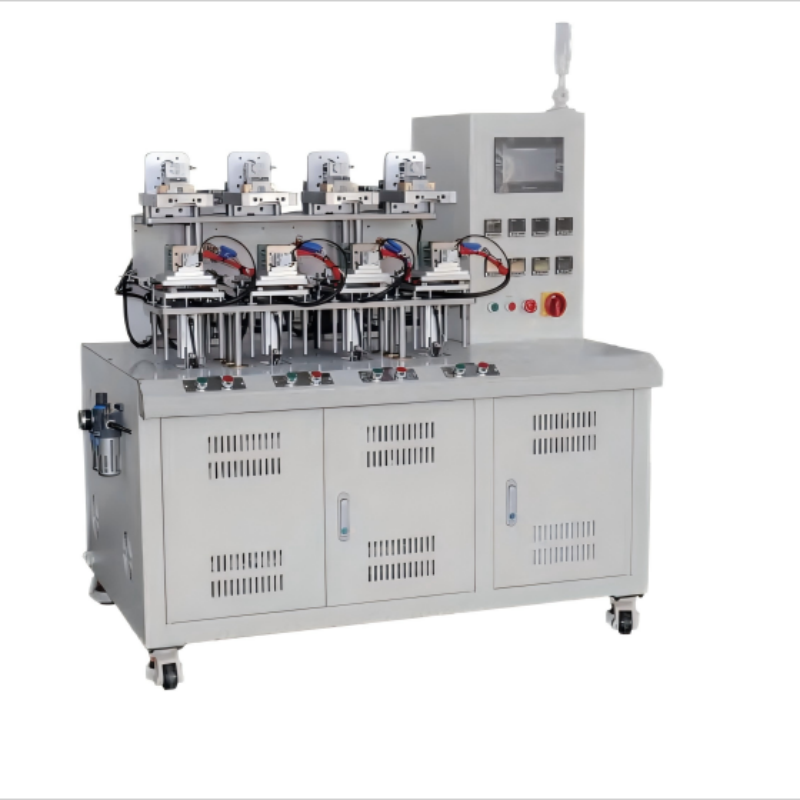
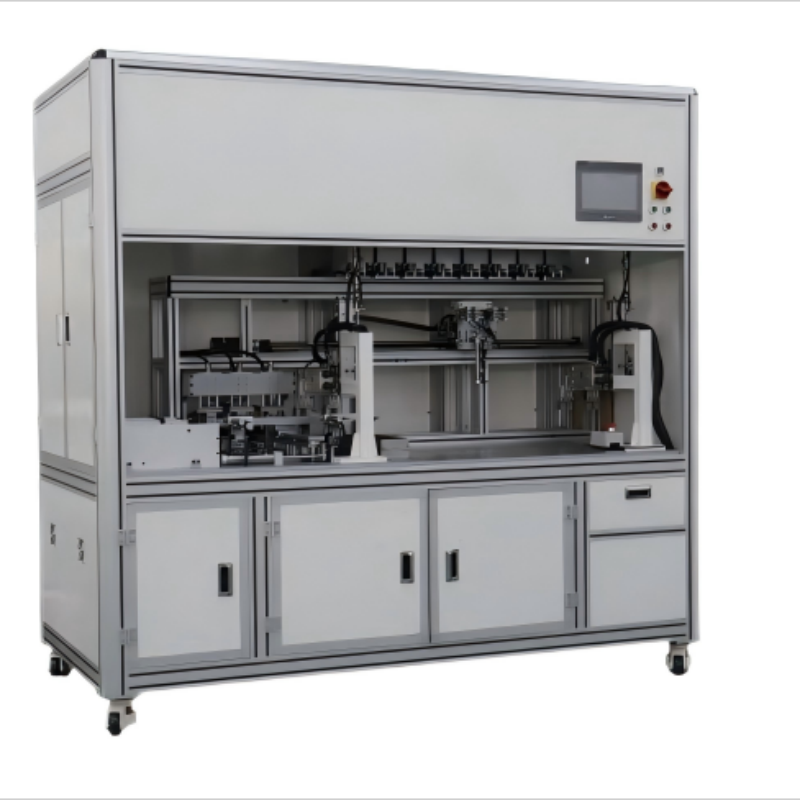
Heat Pipe Manufacturing Production Line
Supports fully automated production.
Copper Tube Cutting Machine
Cuts copper tubes accurately.
Removes tube deformation.
Produces sintered wick structures.
Heat Pipe Vacuum Degassing/Repairing Machine For Copper
Creates high-vacuum conditions.
Automatic Water Injection Machine
Injects working fluid accurately.
Tube End Forming Machine
Shapes tube ends before sealing.
Copper Tube End Closing Machine
Seals copper heat pipes securely.
Automatic Welding Machine
Provides reliable end sealing.
Tube Processing Machine
Supports multiple manufacturing operations.
Control and Testing
Quality Control Throughout Copper Heat Pipe Manufacturing
Manufacturers inspect:
- Copper tube dimensions
- Wick structure quality
- Vacuum level
- Fluid quantity
- Sealing integrity
- Thermal conductivity
- Leak resistance
- Product appearance
In addition, the automatic inspection system improves stability and minimizes defects.
Although they are used in many ways, copper heat pipes find common application in the following areas:
Numerous industries discrete Copper heat pipes.
Consumer Electronics
- Laptops
- Desktop computers
- Gaming consoles
Artificial Intelligence
- AI servers
- GPU cooling
- Data centers
Electric Vehicles
- Battery thermal management
- Inverters
- Charging systems
Telecommunications
- 5G equipment
- Communication servers
Medical Equipment
- MRI systems
- CT scanners
- Diagnostic equipment
Aerospace
- Aircraft electronics
- Satellites
- Spacecraft
Renewable Energy
- Solar systems
- Energy storage equipment
The increasing thermal needs leads also to a higher demand for the copper-based heat pipes.
Emerging Trends in the Manufacturing of Copper Heat Pipes
The industry continues evolving rapidly.
Several trends shape future production.
Higher Automation
Robotic production lines are increasingly adopted by the manufacturers.
AI Quality Inspection
Vision systems improve defect detection.
Thinner Heat Pipes
Consumer electronics require ultra-thin designs.
Advanced Vapor Chambers
The most are products in which vapor chambers are combined with heat pipes.
Sustainable Manufacturing
Factories use less energy and material waste
Accordingly, more precision and flexibility is required in modern production equipment.
Home
Why Choose Nanjing Bangwin Machine
Nanjing Bangwin Machine offers a complete set of turnkey service for Copper Heat Pipe Manufacturing.
Visit:
Nanjing Bangwin Machine Official Website
We provide:
- Heat Pipe Manufacturing Production Line
- Vapor Chamber Manufacturing Production Line
- Sintering Furnace
- Copper Heat Pipe Vacuum DegassingMachine
- Automatic Water Injection Machine
- Copper Tube End Closing Machine
- Tube End Forming Machine
- Tube Processing Machine
- Automatic Welding Machine
In addition, we can make the entire production line according to the customer’s requirements.
In addition, there is installation, commissioning, operator training and technical support from our engineering crew.
This results in increased productivity, product consistency, and manufacturing efficiency for customers.
FAQ
l What is copper heat pipe manufacturing?
Copper heat pipe manufacturing includes tube preparation, wick production, vacuum degassing, fluid filling, sealing, and thermal performance testing.
l Why do manufacturers use copper for heat pipes?
Copper offers high thermal conductivity, excellent corrosion resistance, and outstanding processing performance.
l What equipment does a copper heat pipe factory need?
A factory typically needs tube cutting machines, sintering furnaces, vacuum degassing machines, water injection machines, end closing machines, welding systems, and automated production lines.
l What working fluid is common in copper heat pipes?
Deionized water is the most common working fluid because it delivers excellent thermal performance in medium-temperature applications.
l How do manufacturers test copper heat pipes?
They perform vacuum testing, leak detection, thermal performance evaluation, and long-term reliability testing.
l Which industries use copper heat pipes?
Consumer electronics, AI servers, electric vehicles, telecommunications, aerospace, medical devices, and renewable energy all rely on copper heat pipes.
l Where can I purchase copper heat pipe manufacturing equipment?
You can explore complete production solutions from Nanjing Bangwin Machine Official Website.
To learn more about industrial gas cylinders and related manufacturing solutions, visit:
Bangwin Gas Cylinder
Conclusion
Precision engineering, advanced automation, and stringent quality control come together in the manufacturing process of copper heat pipes. Reliability and cooling are influenced by a multitude of factors through the various stages in copper tube preparation, vacuum degassing, final testing etc.
With demand for thinner devices, more powerful processors and high energy-efficiency across industries, advanced copper heat pipe production equipment is becoming increasingly essential. Providing full manufacturing lines, custom automation systems and professional technical support will make your manufacturers competitive.