Introduction
Heat pipes are in high demand worldwide. As industries continue to require advanced thermal management solutions, manufacturers are investing heavily in state-of-the-art production equipment and automated manufacturing lines.
These devices play a vital role in thermal management systems. Their excellent heat transfer capability makes them widely used in electronics, telecommunications, electric vehicles, data centers, and industrial equipment.
Product quality is directly linked to manufacturing precision. For this reason, every stage of the Heat Pipe Manufacturing Process must be carefully controlled to ensure stable performance and long service life.
Modern manufacturers increasingly rely on automation and intelligent production systems to improve consistency and efficiency. Such technologies help reduce defects while enhancing product reliability and manufacturing productivity.
Nanjing Bangwin Machine provides complete heat pipe manufacturing solutions, helping customers worldwide achieve efficient, high-quality production.
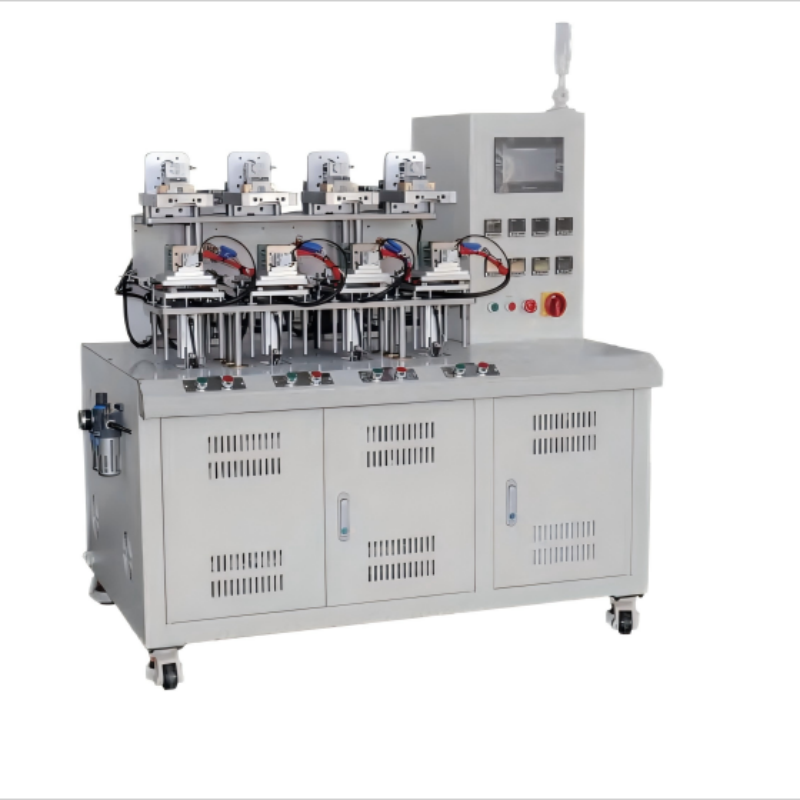

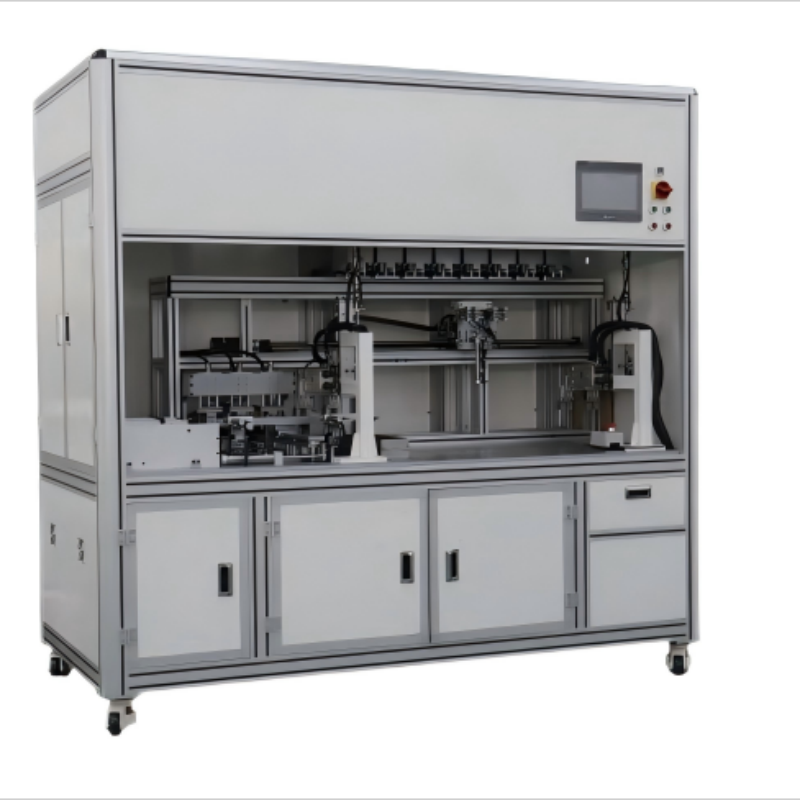
What Is a Heat Pipe?
Now, prior to understanding the Heat Pipe Manufacturing Process you need to see what heating pipe is.
A heat pipe is a type of sealed heat transfer device.
It contains:
- A metal shell
- A wick structure
- A working fluid
- A vacuum environment
The fluid evaporates when heat enters one end of it.
The vapor moves towards the cooler part then.
Thereafter the vapour is condensed and gives off heat.
At the end the wick returns again one more time this liquid.
Therefore, the cycle repeats continuously.
The Importance of The Heat Pipe Manufacturing Process
Thermal performance is one of the most direct results of quality in manufacturing.
Poor production practices can cause:
- Reduced heat transfer efficiency
- Vacuum leakage
- Fluid contamination
- Short product lifespan
- Unstable thermal performance
As a result, manufacturers have to tightly control every step of the production process.
In addition, automated machines provide consistent production.
And hence, intelligent manufacturing systems are used in the modern factories.
Diagnosis of Heat Pipe Manufacturing Process
The parameters of a standard heat pipe manufacturing process are as follows:
- Copper tube preparation
- Wick production
- Wick insertion
- Tube cleaning
- Vacuum degassing
- Working fluid filling
- Tube end sealing
- Aging and testing
- Final inspection
- Packaging
All steps are part of product performance.
Hence manufacturers keep optimizing each stage.
Step 1: Copper Tube Preparation
- It Starts With Copper Tube Preparation
One of the reasons why manufacturers choose copper tube is that it has a high level of thermal conductivity.
- Tube Cutting
Operators are cut tubes which conform to product requirements.
Elliptical seam welding structure for stainless steel tube Bead Seaming Machine/ Copper Tube Cutting Machine
- Accurate cutting ensures dimensional consistency.
In addition to this accurate lengths are the key for improving assembly productivity.
- Tube Straightening
Rounding of tubes before processing Tubes are straightened at manufacturers.
Hence the production line runs perfectly.
- Surface Inspection
Technicians inspect each tube carefully.
As a result, only the materials that qualify are produced.
Step 2: Wick Structure Manufacturing
The wick is still one of the key heat pipe components.
It transports vapor from the condenser liquid to the evaporator.
- Powder Filling
Copper powder is charged into the tube by manufacturers.
- Sintering Process
The tube is fed into a sintering furnace.
Copper particles coalesce in the process known as bonding during sintering.
So a highly porous wick structure developed:
Wick Inspection
Engineers examine the pore size and structure quality.
This helps maintain stable capillary performance.
Step 3: Wick Insertion
While Heat pipes may use different designs of heat pipe, some with separate wick structures.
In these scenarios, operators insert the wick either manually or through an automated process.
Common wick types include:
- Sintered wick
- Mesh wick
- Fiber wick
- Grooved wick
Technicians confirm positions after insertion.
Consequently, circulation of fluid stays effective.
Step 4: Tube Cleaning
The performance of a heat pipe depends directly on cleanliness.
Thorough cleaning is therefore essential during production.
- Ultrasonic Cleaning
Ultrasonic systems remove contaminants.
- Chemical Cleaning
Cleaning agents have the function of removing oil and residuals.
- Drying Process
Drying removes moisture completely.
As a result, vacuum quality improves significantly.
Step 5: Vacuum Degassing
Vacuum degassing is one of the most important process stage.
- Why Degassing Matters
Residual gas reduces thermal performance.
Also, moisture that gets trapped is bad for long-term reliability.
Manufacturers also eliminate contaminants to ensure long-term reliability.
- Degassing Equipment
Specialized vacuum systems are used by modern factories.
This piece of equipment creates a high vacuum.
Meanwhile, heating accelerates gas removal.
As a result, inner purity improves significantly.
- Vacuum Verification
Engineers measure vacuum levels carefully.
This allows each heat pipe to meet strict performance requirements.
Step 6: Working Fluid Filling
Next, degassing is followed by injecting the working fluid.
Fluid Selection
Common working fluids include:
- Water
- Methanol
- Ethanol
- Acetone
- Ammonia
- Fluid Injection
Automated systems ensure precise filling.
Accurate fluid volume remains essential.
This is why manufacturers incorporate precision filling equipment.
Filling Inspection
Technicians verify filling quantities carefully.
This ensures consistent thermal performance across all heat pipes.
Step 7: Tube End Sealing
Manufacturers then permanently seal the tube after filling.
- End Forming
Machines prepare the tube ends.
Domain Link Band Keyword: Tube End Forming Machine
- End Closing
Specialized equipment closes the tube.
This machine is widely used for the closing of copper tubes.
- Welding Process
Some designs require additional welding.
An embodiment of the invention may be an automatic welding machine, with an inner feature or other links: Automatic Welding Machine
This sealing makes the heat pipe essentially hermetically sealed.
- Leak Testing
Engineers inspect sealing quality carefully.
This improves long-term sealing reliability.
Step 8: Age and Run Performance Test
Testing confirms product quality.
- Thermal Performance Test
Engineers evaluate heat transfer capacity.
- Vacuum Stability Test
Technicians verify vacuum integrity.
- Leak Detection
Inspection systems identify defects quickly.
- Reliability Testing
Manufacturers evaluate long-term performance.
Ultimately, customers receive reliable, high-quality products.
Heat Pipe Manufacturing Equipment
Modern production lines comprise a variety of machines.
- Heat Pipe Manufacturing Production Line
Provides complete automation.
- Copper Tube Cutting Machine
Prepares tube materials.
- Sintering Furnace
Creates wick structures.
Removes residual gases.
- Automatic Water Injection Machine
Controls working fluid filling.
- Copper Tube End Closing Machine
Seals tube ends.
- Automatic Welding Machine
Supports specialized sealing processes.
- Tube Processing Machine
Handles multiple manufacturing stages.
This suite of machines will provide a complete heat pipe production solution when combined.
Quality Control of Heat Pipes
An important aspect of the Heat Pipe Manufacturing Process is quality control.
Manufacturers inspect:
- Material quality
- Wick structure
- Vacuum level
- Fluid quantity
- Sealing quality
- Thermal performance
Additionally, automated inspection systems provide much higher levels of consistency.
As a result, production defects decrease significantly.
Heat Pipe Applications
The product support many industries.
- Consumer Electronics
Heat pipes are widely used in laptops and gaming devices.
- AI Servers
Advanced processors generate substantial heat.
For this reason, efficient cooling becomes critical.
- Electric Vehicles
Battery packs require thermal management.
- Telecommunications
3 · 5G needs an effective cooling infrastructure
- Aerospace Industry
Aircraft systems require temperature control.
- Medical Equipment
It is a common technology used in many medical devices.
Why Choose Nanjing Bangwin Machine
Heat pipe and vapor chamber production equipment/technology from manufacturer: Nanjing Bangwin Machine in China.
Website:Nanjing Bangwin Machine
Our product range includes:
- Heat Pipe Manufacturing Production Line
- Vapor Chamber Manufacturing Production Line
- Sintering Furnace
- Vacuum Degassing Machine for Copper Heat Pipes
- Automatic Water Injection Machine
- Copper Tube End Closing Machine
- Tube Processing Machine
We also offer bespoke automation.
In addition, our engineering team provides installation guidance and technical support.
As a result, customers can achieve higher productivity and lower defect rates.
FAQ
- How is a heat pipe made?
The manufacturing process is listed as tube preparation, wick creation, cleaning and leaks testing, vacuuming and filling with working fluid then sealing the ends of the heat pipe.
- Why is vacuum degassing important?
Vacuum degassing is done to eliminate gases and moisture, both of which compromise thermal performance.
- What fluid is used in heat pipes by manufacturers?
Water, methanol, ethanol, acetone or ammonia are the common solvents used by manufacturers.
The heating tube works in a vacuum or various working fluids, which is an indispensable heat conduction element for satellite heat management.
You need tube cutting machines and sintering furnaces, vacuum degassing systems, filling machines and sealing machinery, which are all essential for factories.
Testing heat pipe performance is conducted in two ways.
They conduct thermal tests, vacuum tests, leak detection and reliability assessments.
- What industries use heat pipes?
Heat pipes are used in electronics, AI servers, telecommunications, aerospace, renewable energy and electric vehicles.
It all started when I was looking to purchase heat pipe manufacturing equipment.
You can get some full solution from Nanjing Bangwin Machine
Recommended External Resource
Please check Industrial gas cylinders & related manufacturing product at:
Conclusion
Heat Pipe Manufacturing Process involves a highly controlled sequence of manufacturing steps, including vacuum processing, fluid filling, sealing, and rigorous quality inspection.
Manufacturers continuously optimize every stage to achieve maximum thermal performance, reliability, and product consistency.
Today, automation is transforming heat pipe production by improving efficiency, reducing defects, and ensuring stable product quality.
As a result, modern factories achieve higher productivity, lower defect rates, and more consistent product quality.
To discover advanced thermal management manufacturing systems, please visit Nanjing Bangwin Machine for high-quality heat pipe production equipment and solutions.