
Introduction
With the negative impact heat can have on electronic devices, proper thermal management will be increasingly vital over time as these electronic devices become smaller and smaller. So engineers keep hunting for ways to cool it off.
Heat pipes are still one of the most efficient technologies when it comes to thermal management landscapes among all other options.
And yet, one of the most frequently asked questions is: How does a heat pipe work?
Evaporation, condensation and capillary action is how.
A heat pipe is distinguished from the metal conductors not only by its high thermal conduction but also by the fact that in a heat-pipe, reaches very special compound. This allows them to move heat hundreds times quicker than solid copper for specific states.
Heat pipes today serve industries like electronics, AI servers,, telecommunications, electric vehicles, aerospace and renewable energy.

What Is a Heat Pipe?
To understand How Does a Heat Pipe Work, first it is useful to know the structure.
A Heat pipe is a sealed thermal transfer device.
It usually contains:
- A metal tube
- A wick structure
- A working fluid
- A vacuum environment
These features combine to provide a competent heat transport system.
Additionally, heat pipes function only with no pumps and do not require outside energy.
This makes them a perfect choice for cooling that is energy efficient and reliable.
How Does a Heat Pipe Work?
How Does a Heat Pipe Work — Here the answer deals with constant heating molecules.
A heat pipe has three working sections:
- Evaporator Section
Heat enters the evaporator section, causing the working fluid to absorb energy and evaporate.
- Adiabatic Section
The generated vapor travels through the adiabatic section toward the cooler end of the heat pipe.
- Condenser Section
At the condenser section, the vapor releases its latent heat and condenses into liquid.
There are five steps in the lifecycle:
- Heat absorption
- Liquid evaporation
- Vapor transportation
- Condensation
- Liquid return
Since this cycle goes on infinitely, heat travels quickly from high temperature regions to low temperature regions.
Four Stages of Operation for Heat Pipes
Stage 1: Heat Absorption
The heat source heats the evaporator first.
For example:
- CPU processors
- Power electronics
- LED modules
- Batteries
It is done at varying temperatures, the working fluid absorbs heat energy as temperature increases.
Within thirty seconds, the liquid starts to evaporate.
This results in vapor being developed in the heat pipe.
Stage 2: Vapor Transportation
The vapor then travels to the end where it is cooler.
A pressure difference is created because vapor pressure increases in the hot section.
That is how vapor roams rapidly through that hollow middle.
Compared to solid conduction, vapor transport carries large amounts of heat with little decrease in temperature.
This results in a large increase in thermal efficiency.
Stage 3: Condensation
Conduction (Vapor to Condenser Once vapor gets into the condenser section, it meets a cooler surface.
At this stage, the vapor releases thermal energy.
After releasing heat, the vapor condenses back into liquid.
Cooling fins or heat sinks dissipate the released heat.
As a result, the system ensures that operating temperatures remain steady.
Stage 4: Liquid Return
And eventually, the wick system returns the condensed liquid back.
The capillary action recovers the liquid into the evaporator again.
Then the cycle starts again.
The heat pipe provides stable long-term cooling because this process is continuous.
Heat Pipe Basic Components
In order to understand How Does a Heat Pipe Work, you should know the internal structure of heat pipe.
Heat Pipe Shell
The outer body is the shell itself.
Manufacturers commonly use:
- Copper
- Aluminum
- Stainless steel
Due to its superior thermal conductivity, copper is the most preferred option.
Wick Structure
This wick is the liquid transportation system.
Moreover, it creates capillary force.
Liquid returning on its own would not be the most efficient thing without the wick.
Common wick types include:
- Sintered Powder Wick
Provides strong capillary performance.
- Mesh Wick
Offers low manufacturing cost.
- Grooved Wick
Supports moderate thermal loads.
- Fiber Wick
Provides flexible liquid transport.
Working Fluid
The fluid exchanges heat via evaporation and condensation.
Common working fluids include:
- Water
- Methanol
- Ethanol
- Acetone
- Ammonia
Fluids are selected by the manufacturers based on operating temperatures.
Vacuum Environment
Engineers remove air from the tube when manufacturing it.
Thus, the working fluid evaporates at lower temperature.
Consequently, thermal efficiency improves.
Now, heat pipes are extremely efficient at transferring heat out of the system because they can efficiently absorb heat from a personTMs face and release it into the air as necessary.
Which leads to the question: Why do heat pipes work best than metals?
The solution can be accomplished through phase-change heat transfer.
Conventional metals only use conduction.
However, heat pipes use:
- Evaporation
- Vapor transport
- Condensation
Heat travels much faster because phase changes can take a lot of energy.
For example, the heat pipe achieves hundreds of times the thermal conductivity compared to solid copper.
For this reason, engineers are using pipes in high-performance cooling systems.
Heat Pipe Working Fluids
Performance is directly influenced by the working fluid used.
- Water
Water dominates electronics cooling.
Additionally, it demonstrates good thermal capacity.
- Ammonia
At low temperatures, you usually do well with ammonia.
That is why it is frequently used for aerospace applications.
- Methanol
Methanol supports moderate temperature ranges.
- Acetone
Acetone does well in special systems.
- Sodium
Sodium is commonly used for high temperature industrial heat pipes.
Since each of the fluids handles different environments, engineers make choices on them carefully.
Wick Structures and Their Functions
Most important part will ever remain the wick.
Liquid could not return on a consistent basis without some sort of wick.
So, the cycle of heat transfer would cease.
The wick performs three functions:
- Liquid Transportation
It sends it back to the evaporator in the form of condensate.
- Fluid Distribution
It spreads liquid evenly.
- Orientation Independence
This allows operation with multiple postures.
This allows heat pipes at any angle, and indeed field work has demonstrated that they even work vertically or horizontally.
Heat Pipe Performance Factors
There are many factors which effect the efficiency of heat pipe.
- Heat Load
Optimized designs are needed for higher heat loads.
- Working Fluid
Different fluids support different temperatures.
- Wick Design
Capillary performance affects liquid return.
- Pipe Diameter
Larger diameters transport more vapor.
- Material Selection
Simply put, copper is a better conductor of heat overall.
- Manufacturing Quality
Vacuum quality significantly affects performance.
This is why manufacturers need to be very stringent with quality control.
Heat Pipe Applications
A lot of industries use heat pipes since they provide superlative cooling.
- Consumer Electronics
Laptops use heat pipes extensively.
Additionally, gaming systems require a good cooling system.
- AI Servers
AI systems churn up enormous amounts of heat.
So, an advanced thermal management is necessary.
- Electric Vehicles
Battery packs require stable temperatures.
Therefore, heat pipes are safer and more efficient.
- Telecommunications
Must read for the signal 5G is dependent on cooling.
- Medical Equipment
Medical devices require temperature stability.
- Aerospace Industry
Thermal Control of Aircraft Electronics Using Heat Pipes
- Renewable Energy
Heat pipe technology is integrated in such Solar systems.
Heat Pipe vs Vapor Chamber
Many customers compare these technologies.
- Lower cost
- Simple structure
- Easy installation
- High reliability
- Better heat spreading
- Larger contact area
- Higher cooling density
Now a days many high end devices uses combination of both bridges.
Heat Pipe Manufacturing Process
Determining the product additionally assists respond to How Does a Heat Pipe Work.
A typical manufacturing process includes:
- Tube Cutting
External Link Keywords: Mill (metalworking), Copper Tube Cutting Machine
- Wick Production
- Wick Insertion
Technicians install the wick structure.
- Cleaning
The cleaning process removes contaminants from the tube.
- Vacuum Degassing
Copper Heat Pipe Vacuum Degassing Machine
- Fluid Filling
Automatic Water Injection Machine
- End Sealing
Copper Tube End Closing Machine
- Performance Testing
Engineers verify thermal efficiency through performance testing.
As the quality of production directly translates to performance, Strict quality-control procedures monitor every production stage.
Why Choose Nanjing Bangwin Machine
Nanjing Bangwin Machine–Manufacturer of Heat Pipe and Vapor Chamber Manufacturing Equipment
Website:
Nanjing Bangwin Machine
The company provides:
- Heat Pipe Manufacturing Production Line
- Vapor Chamber Manufacturing Production Line
- Copper Heat Pipe Vacuum Degassing Machine
- Automatic Water Injection Machine
- Copper Tube End Closing Machine
- Sintering Furnace
- Tube Processing Machine
In addition, Nanjing Bangwin Machine provides customized automation solutions for manufacturers of thermal management around the world.
FAQ
- In layman language what is a heat pipe?
Heat pipe – a heat transfer device that transfers heat from one solid surface to another using phase changes of fluid (e.g., evaporation, vapor flow, condensation and liquid return).
- So why is a heat pipe such a better cooing material than copper?
Because phase-change heat transfer moves heat more effectively than solid conduction.
- Do heat pipes require electricity to operate?
No. Heat transfer cycle is natural.
A heat pipe contains a small quantity of working fluid.
Manufacturers commonly select water, methanol, ethanol, acetone, or ammonia.
- Many users also ask whether heat pipes can operate horizontally.
Yes. Modern heat pipes are designed to operate at multiple orientations.
- What industries use heat pipes?
Heat pipes have many industrial applications, including electronics, AI servers, electric vehicles (EVs), telecommunications, aerospace and renewable energy industries.
- Where to buy heat pipe production machine
This can be the professional manufacturing solution from Nanjing Bangwin Machine.
- How to distinguish a Heat Pipe from a Vapor Chamber?
A one-way system is a heat pipe. Conversely, a vapor chamber distributes heat across a larger area.
Recommended External Resource
For Industrial gas cylinders and other manufacturing items, please go:
Conclusion
In response to How Does a Heat Pipe Work, this is an answer contains of high-efficient evaporation/vapor transportation/condensation/liquid return cycle.
So heat pipes still reign supreme among the best cooling technologies of today. Plus, industries are still integrating them with rising thermal needs.
Professional thermal management manufacturing system — Nanjing Bangwin Machine, we have all the advanced heat pipe production equipment and offer turnkey Heat Pipe Modules manufacturer.
相关文章:
 Automatic Welding Machine vs Manual Welding: Efficiency, Cost, and Quality
 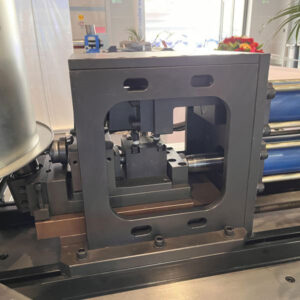 Flange Machine for Precision Industrial Flange Production
 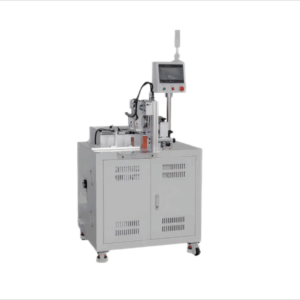 Automatic Welding Machine — High-Speed Intelligent Welding System for Modern Manufacturing
 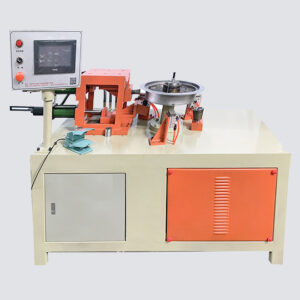 Flanging Machine for Heat Exchanger & Tank Production | Nanjing Bangwin Machine