1. Introduction
Light poles are used as supports for outdoor lighting systems.
Light poles can be used along streets, highways, parking lots, parks, industrial sites and public places.
As a result, manufacturers must have production processes that create strong durable poles.
The Light Pole Production Steps will discuss the entire process from raw steel to finished poles.
One common production process will look similar to the following:
Steel Selection → Cutting → Bending → Forming → Welding → Straightening → Head Processing → Grinding → Surface Treatment → Inspection
As you can see, each step will have an impact on the final quality of the pole.
That is why manufacturers should have suitable equipment to finish each stage of production.
It is even possible to connect each process with a properly designed Light Pole Production Line.
Additionally, many processes can be automated to increase productivity and limit repetitive labor.
Nanjing Bangwin Machine is a manufacturer of industrial machinery and custom metalworking equipment.
We offer many machines that can be used to manufacture light poles.
2. What Are the Main Light Pole Production Steps?
The light pole production process begins with preparing the steel plate.
Manufacturers will then cut the steel plate to the proper shape.
Next, they will bend and form the steel plate into a pole body.
The manufacturers will weld the longitudinal seam of the pole.
The pole will then go through a process to straighten it out.
The pole head will then be cut and processed by the manufacturer.
Finally, the light pole will go through surface treatment and final quality inspection.
Therefore, we can list the summarization of the light pole production process as follows:
Raw Material → Cutting → Forming → Welding → Straightening → Finishing → Surface Treatment → Inspection
This basic process allows manufacturers to make many different types of poles. For instance, some common types of poles include:
- Street light poles
- Highway light poles
- Solar light poles
- Garden light poles
- Parking lot light poles
- High mast poles
- Decorative light poles
3. Step 1: Steel Material Selection
The first step will always be to choose the proper material for the job.
In most cases, manufacturers will use carbon steel to produce light poles.
It is important that the material be strong enough to withstand outdoor elements.
Some of the most important factors include:
- Steel grade
- Plate thickness
- Pole height
- Wind load
- Environmental factors
- Design structure
Taller light poles may require a thicker steel plate.
High-wind areas may also require a more robust design.
As a result, pole manufacturers should know their material specifications before production.
4. Step 2: Steel Plate Cutting
The second step will require the steel plate to be cut.
The steel plate will be cut to match the dimensions of the light pole.
A Plate Trapezoid Shearing Machine is perfect for creating trapezoidal shapes for tapered poles.
Accurately cutting the steel plate will have many benefits.
Not only will it help with accuracy when forming. But it can also reduce wasted material and improve welding accuracy.
Manufacturers should ensure that their cutting dimensions are always accurate.
Here are some Key Cutting Parameters:
◆length
◆width
◆thickness
◆Cutting angle
◆Required taper
Again, the exact parameters will all depend on the final light pole design.
Plate Trapezoid Shearing Machine
5. Step 3: Plate Bending
Once the steel plate is cut to size, manufacturers will bend the plate.
This process will slowly transform the flat steel plate into the desired shape.
There are many different types of forming technologies manufacturers can use.
These technologies can include:
- Hydraulic Bending Machine
- Press Brake Plate Forming Machine
- Plate Rolling Forming Machine
- Axial Forming Machine
Polygonal light poles for example will need to be bent at specific points.
As a result, manufacturers should ensure they have the right equipment for the desired cross-section.
6. Step 4: Pole Forming
Pole forming will create the main body of the light pole.
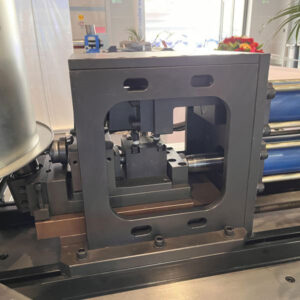
A Horizontal Hydraulic Axial Forming Machine can apply steady forming force.
The machine will slowly work the steel plate into shape.
Light pole cross-sections can come in many different shapes.
Popular shapes include:
- Octagonal
- Polygonal
- Conical
- Tapered
Hydraulic technology is perfect for this process as it can create strong pressure.
Controlled pressure will create consistent dimensional accuracy.
As you know, accuracy is important during the pole forming process.
Internal Link Keyword: Horizontal Hydraulic Axial Forming Machine
7. Step 5: Longitudinal Welding
Forming produces a longitudinal seam on the edges of the plate.
Machine manufacturers will weld this seam to construct the pole.
This weld significantly impacts structural performance.
Installing an Automatic Welding Machine can increase consistency.
Additionally, automatic welding minimizes repetitive tasks.
Key parameters include:
- Current of welding
- Speed of welding
- Speed of wire feeding
- Position of welding
As such, manufacturers should keep welding conditions stable.
8. Step 6: Pole Straightening
Forming and welding may produce slight deformity.
As such, the manufacturer straightens the pole after welding.
Straightening corrects:
- Bending
- Angularity
- Local deformations
A straight pole has better installation performance.
Additionally, it creates a more finished appearance.
Manufacturers should take pole measurements before and after straightening.
As such, operators can verify proper straightness more easily.
9. Step 7: Pole Head Processing
Different lighting projects may require different pole heads.
For instance, manufacturers can build:
- Single-arm poles
- Double-arm poles
- Curved-arms poles
- Straight-arms poles
- Multi-arms poles
Installing a Pole Head Bending Machine allows for different angles.
Additionally, a Pipe Head Shrinking Machine can decrease diameter on certain sections.
As such, manufacturers can customize the upper half for various lighting setups.
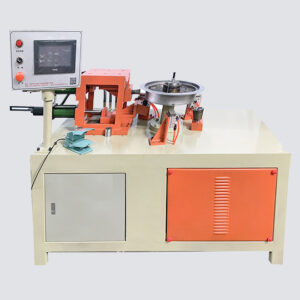
Pipe Head Shrinking Machine
10. Step 8: Grinding and Surface Finishing
Once welded, the pole may have inconsistencies.
As such, many manufacturers will grind down the weld.
Grinding can eliminate:
- Excess weld material
- Sharp edges
- Surface inconsistencies
- Minor surface defects
Smoothing the surface can create a better appearance.
Additionally, it prepares the surface for treatment.
However, manufacturers should avoid grinding too much material off.
They can accidentally grind away necessary material in the weld area.
11. Step 9: Surface Treatment
Light poles are typically installed outdoors.
As such, manufacturers should apply some form of corrosion protection.
Popular surface treatment methods include:
Hot-Dip Galvanizing
Hot-dip galvanizing coats the pole with zinc.
As such, the coating provides excellent corrosion resistance.
Powder Coating
Powder coating allows for additional durability and appearance options.
Builders can use it to support various colors and finishes.
Painting
Many industrial paints can provide custom surface looks.
As such, manufacturers should pick a method that works with environment.
12. Step 10: Quality Inspection
The last stage of production is quality inspection.
During this step, manufacturers should check various attributes.
These can include:
- Overall size
- Height
- Diameter
- Wall thickness
- Straightness
- Weld integrity
- Flange size
- Mounting hole position
- Surface condition
As such, final inspection allows manufacturers to ensure consistent quality.
Operators should also compare products to customer specifications.
13. Machines Used in Light Pole Production
Each step of the Light Pole Production Process will require unique equipment.
Production facilities will typically have these machines. :
Plate Trapezoid Shearing Machine
This machine cuts large steel plates into usable shapes.
The machine allows for tapered light pole production.
Horizontal Hydraulic Axial Forming Machine
This machine forms large steel plates into polygonal or tapered shapes.
The machine uses hydraulics to apply consistent force during forming.
Automatic Welding Machine
This machine automatically welds your chosen longitudinal seam.
The weld machine can increase production consistency and speed.
Pole Head Bending Machine
This machine creates different pole heads and lighting arm angles.
As such, manufacturers can create unique lighting designs.
Pipe Head Shrinking Machine
This machine shrinks the diameter of your chosen pole section.
It allows manufacturers to create special pole head connections.
Straightening Machine
This machine corrects deformation caused by pole forming and welding.
Straightening ensures your poles are perfectly straight.
14. How to Improve Light Pole Production Efficiency
Light pole manufacturers can take steps to improve production.
Use a Complete Production Line
A complete Light Pole Production Line can connect each step of manufacturing.
As such, moving material between machines becomes easier.
Increase Automation
Installing automatic equipment can minimize repetitive tasks.
As such, your facility can maximize production output.
Optimize Material Cutting
Increasing cutting accuracy will improve material usage.
As such, you can decrease waste during production.
Improve Factory Layout
Place machinery near other machines they interact with.
For example, a logical factory layout looks like:
Raw Material → Cutting → Forming → Welding → Straightening → Finishing → Surface Treatment → Inspection
As such, planning your factory layout can minimize transporting material.
Match Equipment to Product Specifications
Manufacturers should consider their:
- Steel thickness
- Pole diameter
- Pole length
- Desired production output
- Level of automation
When buying equipment, the machines can stay within their optimal range.
15. Light Pole Production Line
A Light Pole Production Line combines each major step of manufacturing.
- Lines can include:
- Cutting steel plates
- Plate forming
- Hydraulic pole forming
- Longitudinal welding
- Pole straightening
- Pole head processing
- Grinding
- Surface treatment
- Final inspection
Additionally, an automated production line will have material feeding and handling equipment.
As such, you can run an efficient production line with less workers.
Benefits of a Complete Production Line
- Increased production efficiency
- Dimensional consistency
- Minimal repetitive tasks
- Easy material movement
- Production is easy to manage
- Flexible product production
Large-volume manufacturers can benefit greatly from a complete light pole production line.
16. Why Choose Nanjing Bangwin Machine?
Nanjing Bangwin Machinery is a provider of industrial machinery.
They focus on custom manufacturing solutions and metalworking equipment.
Equipment they can provide for light pole manufacturing include:
- Plate Trapezoid Shearing Machine
- Horizontal Hydraulic Axial Forming Machine
- Automatic Welding Machine
- Pole Head Bending Machine
- Pipe Head Shrinking Machine
- Straightening Machine
Nanjing Bangwin Machine can also configure custom equipment.
As such, you can have a production line centered around your needs.
Visit Nanjing Bangwin Machine at their official website:
Home
17. FAQ
- What are the main Light Pole Production Steps?
The main steps include material selection, steel cutting, bending, forming, welding, straightening, head processing, grinding, surface treatment, and inspection.
- What material do manufacturers use for light poles?
Manufacturers commonly use carbon steel.
However, some applications can use galvanized steel or aluminum.
- What machine cuts steel plates for light poles?
A Plate Trapezoid Shearing Machine can cut steel plates for tapered light pole production.
- What machine forms light poles?
A Horizontal Hydraulic Axial Forming Machine can form steel plates into polygonal and tapered structures.
- Why do manufacturers weld the longitudinal seam?
The longitudinal weld joins the formed steel plate.
Therefore, it creates an important structural connection along the pole.
- Can manufacturers automate light pole production?
Yes.
Manufacturers can integrate cutting, forming, welding, straightening, and material handling equipment.
Therefore, an automated system can reduce repetitive manual work.
- What surface treatment do light poles need?
Common options include hot-dip galvanizing, powder coating, and industrial painting.
The suitable option depends on the installation environment.
- Can one production line make different light poles?
Yes.
A properly configured production line can support different heights, diameters, shapes, and arm structures.
However, manufacturers should confirm product specifications before selecting equipment.
- Who supplies light pole production equipment?
Nanjing Bangwin Machine provides machinery and customized production solutions for metalworking applications.
You can visit:
Nanjing Bangwin Machine Official Website
18. Conclusion
These were the Light Pole Production Steps.
Manufacturers begin by selecting a proper steel grade for production.
They will then cut and form the steel plate into shape.
Next, they weld the steel plate together and straighten it.
Finally, they finish grinding the pole head and treat the surface.
Once finished, manufacturers can apply a surface treatment and inspection.
Each stage of production requires specific equipment and attention.
Light Pole Production Lines manufacture light poles with increased efficiency.
Furthermore, you can improve productivity and consistency with automation.
For businesses looking to start light pole production, Nanjing Bangwin Machine is here to help.
Visit us at:
Nanjing Bangwin Machine Official Website