Introduction
Basically streetlight poles holds lighting system in roads, highways, parking area and public areas.
Hence, manufacturers require reliable machinery to manufacture durable poles.
A Street Light Pole Manufacturing Line integrates multiple metalworking processes into a single production system.
Your standard procedure consists of steel plate cut, bending, welding, straightening, and finishing in addition to testing.
Moreover, the line can also be tailored for various pole shapes and sizes by the manufacturers.
Common products include:
- Conical street light poles
- Octagonal light poles
- Polygonal light poles
- Tapered light poles
- Solar street light poles
- Highway lighting poles
- Decorative lighting poles
An integrated manufacturing line for large scale production can greatly increase the capability of your overall process.
Industrial machinery Nanjing Bangwin Machine is a Chinese mature supplier and Customized production machine solutions for metalworking applications
What is a street light pole manufacturing line?
The Street Light Pole Manufacturing Line is an integrated production line for producing metal light poles.
It links different machines and phases of production.
A simple flow is as follows —
Steel Plate→Cutting→Forming→Welding→Straightening→Head Processing →Grinding →Surface Treatment →Inspection
At every point of progression, you are responsible for the final quality of this pole.
Accurate cutting gives good material sizes as an example.
Next, precise forming produces the desired pole shape.
Then welding is performed to make a strong longitudinal seam.
Last but not least, surface treatment reduces corrosion resistance.
Hence, manufacturers would be advised to plan the entire production process prior to sourcing equipment.
Street Light Pole Manufacturing Process
Step 1: Steel Plate Preparation
The manufacturers choose the segregated steel plates based on a specification of the product.
Important factors include:
- Steel grade
- Plate thickness
- Pole height
- Wind load
- Application environment
It also has to show enough structural material strength.
Hence, manufacturers need to decide material needs prior to production.
Step 2: Steel Plate Cutting
The following process is to cut the steel plate.
Some manufacturers use a Plate Trapezoid Shearing Machine to produce for the tempered pole.
It extrudes plates into appropriate shapes for further stamping.
Accurate cutting helps maintain:
- Correct dimensions
- Proper taper
- Consistent forming
- Stable welding conditions
Hence, the cutting accuracy plays a key role in the subsequent processes.
Plate Bending and Forming
Manufacturers then form the steel plate.
The machine makes you use controlled force to produce the desired cross-section.
Common shapes include:
- Octagonal
- Polygonal
- Conical
- Tapered
The application of Horizontal hydraulic axial forming machine with strong edge formulation force.
Hydraulic also regulates the forming pressure considerably.
Thus, this leads to better dimensional accuracy being achieved by manufacturers.
Step 4: Longitudinal Welding
The edges of the plates converge halfway through the pole length after being formed.
The longitudinal seam is then welded by the manufacturers.
The main structural connection created with this welding process.
It can also encourage Production Consistency by way of an Automated Welding Machine.
Moreover, automatic welding also minimizes manual repetitive work.
Important welding parameters include:
- Welding current
- Welding speed
- Wire feed speed
- Welding position
Stable welding parameters, therefore, are good for consistent seam quality.
Step 5: Pole Straightening
There can be minor deformation due to forming and welding.
For this reason, for the manufacture of the straightening pole is often carried out after welding.
The straightening process corrects:
- Bending
- Angular deviation
- Local deformation
The pole behaves well and installs perfectly.
Moreover, accurate straightening enhances finished product aesthetics.
Step 6: Pole Head Processing
Different lighting support structures adorn street light poles.
For example, manufacturers can produce:
- Single-arm poles
- Double-arm poles
- Curved-arm poles
- Straight-arm poles
Arm configurations on a Pole Head Bending Machine.
A Pipe Head Shrinking Machine can reduce those the sections of interest.
This allows manufacturers to design pole head structures that are specifically designed to comply with these requirements.
Pipe Head Shrinking Machine
Grinding and Surface Finishing
Depending on how the parts are welded, a finished seam might require grinding.
Grinding removes:
- Weld irregularities
- Sharp edges
- Surface defects
Then the pole becomes available for further treatment.
Manufacturers should control grinding carefully.
However, grinding out too much can take away excess material.
Step 8: Surface Treatment
Outdoor poles require corrosion protection.
Common surface treatments include:
- Hot-dip galvanizing
- Powder coating
- Painting
Hot-dip galvanizing is a robust means of corrosion protection.
On the other hand, powder coating offers more appearance choices.
So the surface treatment of the manufacturers in the raw materials, it is necessary to choose based on their own environment.
Step 9: Quality Inspection
Stage number six is product inspection.
Manufacturers should check:
- Pole dimensions
- Straightness
- Wall thickness
- Weld quality
- Flange dimensions
- Surface condition
- Mounting holes
Thus inspection ensures that poles meet quality as required by the project.
Host Equipment of the Production Line
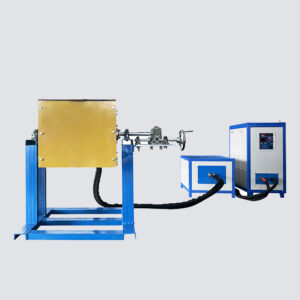
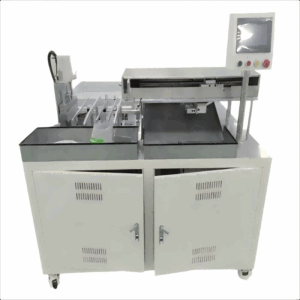
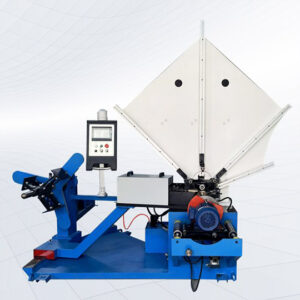
Complete Street Light Pole Manufacturing Line with several specialized machines.
Plate Trapezoid Shearing Machine
Machine that preps steel plates before pole forming.
This is the device to cut tapered designs precisely.
Horizontal Hydraulic Axial Forming Machine
This machine shapes steel plates into polygonal or conical structures.
Feeding controlled hydraulic forming force.
Automatic Welding Machine
That is used here to weld the longitudinal pole seam of the structure.
It can ensure consistent and effective productivity.
Pole Head Bending Machine
Creates curved or angledLighting arms — such as the arm that you are inside of for your average lamp.
This allows the design of various poles from the same manufacturing line.
Pipe Head Shrinking Machine
This machine reduces the diameter of other pipe sections.
It supports specialized connection structures.
Straightening Machine
This machine can straighten deformation after forming and welding.
Therefore, it improves pole straightness.
Automatic Street Light Pole Production Line
A fully automatic Street Light Pole Manufacturing Line can combine multiple production processes.
Automation may include: (subject to the requirements of the factories)
- Automatic plate feeding
- Automatic positioning
- Hydraulic forming
- Automatic welding
- Pole handling
- Straightening
- Online inspection
This allows manufacturers to minimize procedural tasks.
Automation also improves production consistency.
Advantages of Automation
Higher Production Capacity
Automated equipment reduces repetitive operations.
This means that factories can produce more.
Better Product Consistency
Machines maintain stable processing parameters.
It reduces the manufacturing process from poles to make them uniform.
Lower Labor Requirements
Automation decreases the reliance on human labor.
So manufacturers can deploy workers to other parts of the line.
Improved Production Safety
Automated handling minimizes the manual movement of heavy steel plates.
Easier Production Management
Digital controls can be used for modern equipment.
This allows operators to keep track of significant parameters of production.
Advantages of an entire manufacturing line
There are many benefits of a complete production line.
Integrated Production
Manufacturers can connect multiple processes.
This makes material movement more productive.
Improved Productivity
Each process is done efficiently by specialised equipment.
As a side effect, production capacity can be expanded upward.
Consistent Product Quality
Controlled machine parameters improve repeatability.
Using this, manufacturers can achieve constant dimensional tolerance of the products.
Reduced Production Waste
Accurate cutting and forming minimize material waste.
Flexible Product Manufacturing
The line could also support many pole designs in a configured state.
So, builders can provide multiple projects.
Choosing equipment for street light pole manufacturing
Investigate Before Purchasing Equipment Some factors that manufacturers should keep in mind prior to making an equipment purchase as outlined below.
Production Capacity
First, determine the required output.
Automated systems may be needed for factories with high volume.
In the meantime, less capacious factories can opt for a semi-automatic arrangement.
Pole Dimensions
Define:
- Pole height
- Base diameter
- Top diameter
- Wall thickness
- Pole shape
These specifications determine machine capacity.
Material Thickness
The thicker the plates, more forming force is required.
Hence, manufacturers must choose machines depending on the steel thickness required.
Automation Level
Consider whether the factory needs:
- Manual equipment
- Semi-automatic equipment
- Fully automatic production
Which one you go for will depend on your production volume and budget.
Factory Layout
Adequate space for the manufacturing line
Manufacturers should plan areas for:
- Raw materials
- Cutting
- Forming
- Welding
- Finishing
- Finished products
For that reason, factory layout planning should be done prior to installation.
Applications of Street Light Poles
There are many applications related to street light poles.
Urban Roads
Street Lighting Poles are used by cities for road and pedestrian lighting.
Highways
Poles must be tall and sturdy for most highway projects.
Parking Lots
Medium-level lighting pole is very common in places such as parking areas.
Parks
Some parks utilize decorative light structures.
Solar Street Lighting
Solar street light poles hold both solar panels as well as lighting fixtures.
Thus pole structures for solar lighting projects must be tailor made.
Why Choose Nanjing Bangwin Machine
About Nanjing Bangwin Machine industrial Machinery Customized Production
The firm specializes in metalworking equipment and production systems.
For street light pole manufacturing, relevant equipment includes:
- Plate Trapezoid Shearing Machine
- Horizontal Hydraulic Axial Forming Machine
- Automatic Welding Machine
- Pole Head Bending Machine
- Pipe Head Shrinking Machine
- Straightening Machine
Additionally, Nanjing Bangwin Machine can assist clients in determining the necessary equipment based on their production needs.
The solution can consider:
- Pole dimensions
- Steel thickness
- Production capacity
- Automation requirements
- Factory layout
As such, they can design a production system that actually suits their real needs in manufacturing.
Official Website: https://bangwingascylinder.com/
FAQ
- What is a Street Light Pole Manufacturing Line?
A Street Light Pole Manufacturing Line combines cutting, forming, welding, straightening, finishing, and inspection processes.
- What machines are needed to manufacture street light poles?
A typical line includes a plate shearing machine, forming machine, welding machine, straightening equipment, and pole head processing equipment.
- What material do manufacturers use for street light poles?
Manufacturers commonly use carbon steel.
The specific steel grade depends on structural requirements and environmental conditions.
- Can one manufacturing line produce different pole shapes?
Yes. A properly configured line can produce conical, octagonal, polygonal, and other pole designs.
However, manufacturers should confirm the required product range before equipment selection.
- What is the difference between a production line and individual machines?
Individual machines complete specific processes.
A production line connects multiple machines into a complete manufacturing system.
Therefore, a production line usually provides better process integration.
- Is an automatic street light pole manufacturing line worth buying?
An automatic line can improve productivity and reduce repetitive manual work.
However, the ideal automation level depends on production volume and investment requirements.
- Can Nanjing Bangwin Machine customize a manufacturing line?
Yes. Nanjing Bangwin Machine can configure equipment according to pole specifications, production capacity, material thickness, and automation requirements.
Conclusion
Street Light Pole Manufacturing Line is a production system that integrates various metalworking processes into one.
The steel plates are usually prepared as part of its manufacturing process.
After that manufacturers shape the steel plate by cutting, bending and contouring.
Then they weld the lengthwise seam and straighten up the pole.
Then, manufacturers process the pole head and surface finish.
Finally, corrosion protection is applied and the finished product inspected.
So the right equipment configuration is important to production efficiency and product quality.
Nanjing Bangwin Machine offers specialized industrial machinery and production solutions for manufacturers developing a new facility.
Please visit the official site to discover more about its equipment and manufacturing solutions:
Nanjing Bangwin Machine