1. Introduction
Thermal management is critical to many forms of electronic equipment.
As electronic devices become thinner, heat density continues to rise.
This puts more demand on engineers to effectively remove heat.
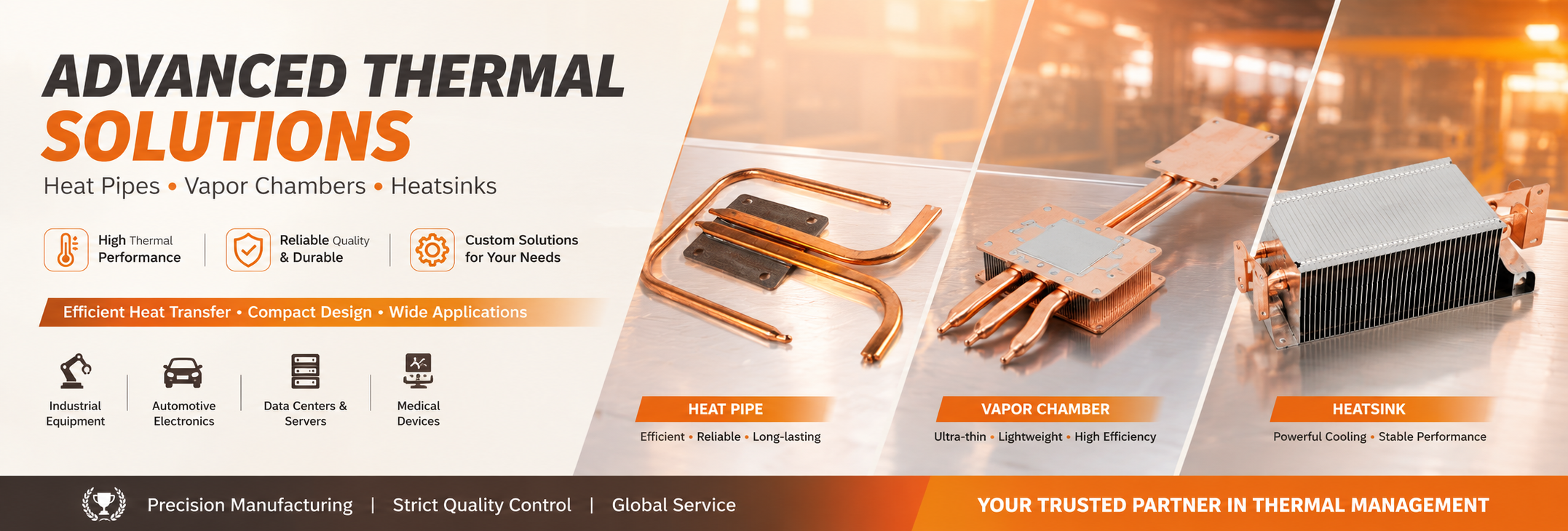
Heat pipes and vapor chambers are two common heat dissipation technologies.
Heat pipes and vapor chambers both utilize phase-change heat transfer. However, their designs vary.
Here we breakdown Vapor Chamber vs Heat Pipe for easier understanding.
We’ll highlight the differences in structure and working principles.
We’ll take a look at the strengths and weaknesses of each technology.
Finally, we’ll discuss what equipment manufacturers can use to produce both technologies.
If you are looking to produce heat pipes or vapor chambers, you need the right equipment.
Nanjing Bangwin Machine supplies manufacturing equipment for heat pipes and vapor chambers.
Nanjing Bangwin Machine Official Website
2. What Is a Heat Pipe?
Heat pipes are sealed thermal conduits that utilize evaporation and condensation to move heat.
Essentially, a heat pipe includes the following components:
- Metal tube
- Working fluid
- Wick structure
- Evaporator section
- Condenser section
- Vapor space
Heat is absorbed at the evaporator section.
The working fluid evaporates and turns to vapor.
The vapor travels to the condenser section which is typically cooler.
Once it reaches the condenser section, vapor transfers heat through condensation.
The liquid then travels back to the evaporator section through the wick structure.
Thus, a heat pipe can continuously circulate heat.
Copper pipes are commonly used to cool electronics.
Heat pipes are useful when connecting a small heat source to a larger heat sink.
Heat Pipe Manufacturing Process
3. What Is a Vapor Chamber?
A vapor chamber utilizes a very similar principle of phase-change heat transfer.
Instead of being a tube, a vapor chamber normally has a flat design.
Inside the vapor chamber, there is working fluid and wick structure.
Heat is applied to one portion of the vapor chamber.
The working fluid evaporates and travels as vapor to spread across the chamber.
Vapor will then condense back into liquid on cooler regions of the chamber.
The wick structure moves liquid back to the heat source.
Since vapor chambers have a larger surface area, they are great at spreading heat.
Vapor chambers are ideal for heat dissipation on compact electronic devices.
For instance, vapor chambers are used in many of the following products:
- Smartphones
- Gaming devices
- Graphics cards
- Laptop computers
- High performance CPUs
- LED lights
Vapor Chamber Production Equipment
4. Vapor Chamber vs Heat Pipe: Main Differences
Geometry. Heat pipes typically have tubular structures.
On the other hand, vapor chambers usually come in flat plate form.
Heat Pipe vs Vapor Chamber
Heat pipes transfer heat effectively in one direction.
Feature Heat Pipe Vapor Chamber
Basic shape Tubular Flat chamber
Heat transfer direction Mainly along the tube Two-dimensional spreading
Heat source Usually localized Usually distributed across an area
Flexibility High Lower
Heat spreading Mainly linear Broad area
Typical applications Heat sinks, laptops, electronics CPUs, GPUs, smartphones
Manufacturing Tube-based process Flat chamber process
Installation Flexible routing Direct surface contact
Best advantage Long-distance heat transfer Area-based heat spreading
You can’t really say that one technology is better than the other.
Each has its advantages, and the proper choice depends on your application.
5. Structure Comparison
Heat Pipe Structure
Heat pipes usually have cylindrical structures with an internal wick lining.
There is also working fluid inside of heat pipes.
Due to its cylindrical nature, heatpipes provide heat transfer primarily along the axis.
Heat pipes can come in various diameters to support various thermal demands.
Heat pipes can also be bent to fit the desired geometry.
Vapor Chamber Structure
Vapor chambers consist of a flat sealed container.
There is an internal wick structure and cavity for vapor to move.
Thus, vapor chambers can spread heat across a 2D surface area.
Designers favor vapor chambers for small heat sources.
6. Working Principle Comparison
Heat pipes and vapor chambers use phase change heat transfer.
The method in which vapor travels is what distinguishes them.
Heat Pipe Working Principle
The heat is absorbed at the evaporator section.
Afterward, the working fluid changes phase from liquid to vapor.
The vapor then makes its way to the condenser section.
Finally, vapor will condense and release its latent heat energy.
The liquid returns to the evaporator section through capillary action.
Vapor Chamber Working Principle
Vapor chambers operate on largely the same principle.
However, as vapor spreads across the chamber, it makes its way to cooler areas.
Once it reaches a cool enough area, it condenses and releases heat energy.
The liquid then gets wicked back to the heat source area.
Vapor chambers excel at spreading heat over a larger area.
7. Heat Transfer Performance
When it comes to heat transfer performance, each tech excels in different areas.
Heat pipes excel when there is a clear linear path from heat source to heat sink.
Take how a heat pipe can move heat from a processor to a fin stack located away from the CPU.
Thus, when you need flexible heat transfer, heat pipes are ideal.
Vapor chambers can help dissipate heat that is localized in a small area.
By spreading the heat over a larger surface, vapor chambers help lower thermal concentrations.
Ultimately, heat transfer performance will vary based on a few factors.
Such factors include:
- Working fluid
- Wick structure
- Geometry of pipe/chamber
- Operating temperature
- Heat load
- Orientation
- Thermal resistance
- Quality of manufacturing
8. Heat Spreading Capability
Heat spreading is a major strength of vapor chambers over heat pipes.
Pipes are meant to transfer heat from one point to another.
However, vapor chambers can spread heat in multiple directions.
Thus, vapor chambers are capable of spreading heat over a large surface area.
This helps with high-power processors as well as compact electronics.
A vapor chamber can spread the heat from a processor out across a cooling plate.
The larger surface area of the cooling plate can then be attached to a heat sink.
9. Application Comparison
Heat pipes and vapor chambers are used in many applications.
Heat pipes are commonly used in:
- Laptop cooling solutions
- Desktop computers
- LED lights
- Industrial electronics
- Communication devices
- Power electronics
- Heat sinks
- Industrial thermal systems
Vapor Chamber Applications
Typical applications of vapor chambers include:
- Smartphones
- Gaming laptops
- GPUs
- High performance CPUs
- Servers
- LED systems
- Compact electronic devices
Devices that use vapor chambers are typically high power and thin.
10. Size and Shape Considerations
Heat pipes offer large flexibility when it comes to design.
Heat pipes can be bent into various shapes and configurations.
Designers can route heat to different locations as needed.
This allows for more freedom when it comes to heat pipe integration.
Vapor chambers are great when you need maximum surface coverage.
However, vapor chambers do not offer the same shape flexibility.
Vapor chambers need to have a flat surface to mount onto.
For small devices, engineers will use vapor chambers with a heat sink.
11. Manufacturing Differences
They use different manufacturing processes.
A heat pipe begins as a metal tube.
Then the working wick inside is prepared.
The tube is cleaned out afterwards.
Then the working fluid is filled in.
Vacuum pumping and degassing occurs next.
Finally, the heat pipe is sealed and tested.
For example, this heat pipe manufacturing process involves the steps:
Tube Preparation → Cleaning → Wick Preparation → Powder Filling → Sintering → Vacuum Degassing → Working Fluid Charging → Sealing → Testing
Vapor chamber production starts with another form of structure.
Typically, this includes flat metal sheets or fabricated chamber halves.
Manufacturers then build the internal wick structures.
After assembly, the vapor chamber is sealed.
Vacuum processing occurs next.
Working fluid charging happens afterwards.
Finally, leak and performance tests can verify proper operation.
As a result, vapor chamber production involves different equipment.
12. Heat Pipe Manufacturing Equipment
Factories making heat pipes will need multiple machines.
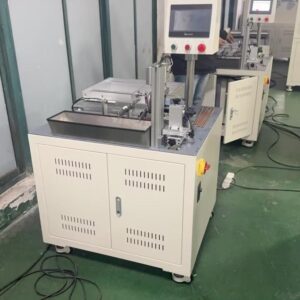
Heat Pipe Powder Filling Machine
This machine fills metal powder into the inside of a heat pipe.
This powder can create a wick structure after sintering takes place.
As a result, powder filling accuracy will affect wick quality.
Heat Pipe Powder Filling Machine
Heat Pipe Degassing Machine
This machine helps remove unwanted gases from inside the heat pipe.
As a result, it can help establish a proper internal vacuum.
Heat Pipe Vacuum Pumping Machine
Vacuum pumping refers to the removal of air and other gases from the heat pipe.
As a result, achieving correct vacuum levels is an important part of manufacturing.
Heat Pipe Vacuum Pumping Machine
Heat Pipe Charging Machine
A heat pipe charging machine will introduce the working fluid.
As a result, proper fluid charging will help ensure consistent thermal performance.
Heat Pipe Sealing Machine
Once vacuum processing and charging is finished, sealing occurs.
As a result, manufacturers will need precise control over the sealing process.
Heat Pipe Testing Machine
Before shipping products to customers, manufacturers should test them.
Heat pipe testing can analyze thermal performance and part consistency.
As a result, testing machinery is crucial to ensuring production quality.
13. Vapor Chamber Manufacturing Equipment
Vapor chambers also require specific machinery for production.
Some common machines can include:
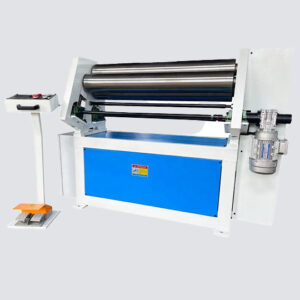
- Sheet forming machine
- Wick structure machine
- Cleaning machine
- Vacuum pumping machine
- Degassing machine
- Working fluid charging machine
- Laser sealing machine
- Hot press hydraulic machine
- Leak test machine
- Thermal performance test machine
For high volume production, you will likely need some level of automation.
As a result, production lines can combine all these machines into one system.
14. Cost Comparison
Overall cost will vary based on the design and volume needed.
Heat pipes can use simple tubular forms in many applications.
As a result, their manufacturing process may be suited for large volume production.
In contrast, vapor chambers use more complicated flat designs.
Plus, internal wick preparation and sealing often requires special tools.
As a result, the machinery needed for vapor chamber production can be more complex.
However, keep in mind that the final product cost will vary based on many factors:
- Material
- Size
- Working Fluid
- Wick design
- Production volume
- Automation level
- Required testing
- Product tolerance
As a result, compare total production needs when seeking suppliers, rather than material cost alone.
15. How to Choose Between a Vapor Chamber and Heat Pipe
Selection of either technology depends on your thermal problem.
When to Choose a Heat Pipe
When heat must travel a long distance
Heat pipes provide routing flexibility
When you have a relatively linear heat path
Heat pipes easily link a heat source to a heat sink
When space is limited around the heat source
Heat pipes can use tight bends if needed
When to Choose a Vapor Chamber
When you need to spread heat across a wide area
Vapor chambers handle higher heat flux better than heat pipes
You have a high power heat source
Unlike heat pipes, vapor chambers are low profile
You have a flat area to mount the heat spreader
Many electronics have flat PCBs as a base surface
Heat dissipation needs to be balanced
Vapor chambers avoid concentrated hot spots
You are designing compact high-performance electronics
Vapor chambers can fit into thin form factors
16. Heat Pipe vs Vapor Chamber for Electronics
Electronics have continued to get more powerful over time.
However, chips and processors cannot always spread their heat well.
As a result, modern electronics often need better heat spreading solutions.
A vapor chamber can take heat from something like a processor and spread it across a larger area.
Then a heatsink can absorb that heat and radiate/fan it away.
Heat pipes can also be used to bring heat from a processor to a fin stack that is farther away.
As a result, both technologies are viable options depending on your design constraints.
In some cases, it can even make sense to use a hybrid solution of both.
A vapor chamber can spread heat and then be connected to heat pipes.
The heat pipes can effectively transfer heat towards a larger heatsink.
17. Why Manufacturing Equipment Matters
If heat pipes or vapor chambers are not manufactured correctly, they will not perform well.
Small inconsistencies during manufacturing can impact the internal wick structure.
In addition, poor vacuum processing can impact heat pipe performance.
Incorrectly charging heat pipes with working fluid can also alter performance.
As a result, proper machinery is essential for mass-producing these parts.
Here are some important aspects of heat pipe production that need to be controlled:
- Powder filling consistency
- Wick density
- Vacuum level
- Degassing results
- Fluid charging consistency
- Seal quality
- Physical dimensioning
- Testing procedures
As a result, you want machinery that can produce stable and repeatable results.
Also, high-volume manufacturers will benefit from equipment that automates these processes.
18. Why Choose Nanjing Bangwin Machine?
Nanjing Bangwin Machine specializes in industrial machinery for factories.
One focus of the company is providing thermal management equipment.
Not only can it support heat pipe production machinery needs.
Companies can also reach out about custom manufacturing equipment needs.
Pages on our site related to this article include:
- Heat Pipe Machine
- Heat Pipe Production Line
- Heat Pipe Manufacturing Line
- Heat Pipe Equipment
- Heat Pipe Powder Filling Machine
- Heat Pipe Degassing Machine
- Heat Pipe Vacuum Pumping Machine
- Heat Pipe Charging Machine
- Heat Pipe Sealing Machine
- Heat Pipe Testing Machine
- Vapor Chamber Production Equipment
- Vapor Chamber Production Line
Plus, machinery configurations can be tailored to your specific production needs.
These can include needs such as:
- Part dimensions
- Production rates
- Levels of automation
- Part design
- Factory space
- Required testing
As a result, your ideal machine setup can be customized to your production needs.
Visit Nanjing Bangwin Machine for more information!
Home
Nanjing Bangwin Machine Official Website
19. FAQ
What is the difference between vapor chamber and heat pipe?
Heat pipes are typically long tubes that transfer heat in one direction.
Vapor chambers can spread heat across a larger surface area.
Can I use a vapor chamber instead of a heat pipe?
In some situations, but not always.
Heat pipes are great when you need heat to travel.
Vapor chambers are better at spreading heat over a larger area.
Which is better for CPUs, vapor chamber or heat pipe?
It depends on your CPU cooling solution.
If your CPU is very hot and contained in a small area, a vapor chamber can help spread that heat over a larger area.
Which is better for laptops, vapor chamber or heat pipe?
Like CPUs, both can be useful for laptops.
If your laptop heats up in a small area you can use vapor chambers to help spread that heat.
Is vapor chamber better than heat pipe?
No not necessarily.
Heat pipes are useful when you need to move heat to a different place.
Vapor chambers are used when you need to spread the heat out.
Which works better heat pipe or vapor chamber?
If your goal is to spread heat over a larger area, vapor chambers will do a better job.
Are vapor chambers more expensive than heat pipes?
Due to the more complicated manufacturing process, vapor chambers can be more expensive.
However, the costs of heat pipes and vapor chambers vary depending on many different factors.
Do heat pipes and vapor chambers work the same way?
Yes, both use the same principle of evaporation and condensation to transfer heat.
The design of vapor chambers and heat pipes are different however.
They will spread heat differently based on those designs.
Can heat pipes and vapor chambers be used together?
Yes, in some cases you can use them together.
Can you put a vapor chamber in a heat pipe?
Since vapor chambers and heat pipes are both used for spreading heat,
you cannot put one inside the other.
What machine is used to make heat pipes?
There are many different machines used in heat pipe production.
These can include powder filling machines, vacuum pumps, degassing machines, etc.
Most manufacturers will have an assembly line setup to automate this process.
What machines do you need to make a vapor chamber?
Similar to heat pipes, there are many machines used in vapor chamber production.
A few key machines include machines to form the sheets, clean the chamber, vacuum pump, charge working fluid, seal the chamber, and test the final product.
Do heat pipes use electricity?
No, but some heat pipe cooling systems may use electricity.
Electric fans are common on heatsinks that use heat pipes.
Since vapor chambers and heat pipes work differently,
they each have their own strengths and weaknesses.
Where can I find vapor chamber manufacturing equipment?
You can find vapor chamber manufacturing equipment at Nanjing Bangwin Machine.
Nanjing Bangwin Machine is a company that sells industrial machinery.
20. Conclusion
Heat pipes and vapor chambers can both be better in different situations.
Heat pipes are great at transferring heat to where you need it to go.
Vapor chambers are great at spreading heat out over a larger surface area.
Each uses a method of evaporation and condensation to transfer heat.
Because of their different designs, each must use different manufacturing processes.
Heat pipe manufacturing will usually involve these steps:
Tube Prep → Cleaning → Wick Prep → Powder Fill → Sintering → Vacuum Degassing → Charge Fluid → Seal → Testing
While vapor chamber production requires specialized equipment for creating and sealing flat chambers.
No matter what thermal solutions you’re manufacturing,
Nanjing Bangwin Machine can provide you with the necessary machinery.