1. Overview of Vapor Chamber Making Machine
A Vapor Chamber Making Machine is equipment used for vapor chamber production.
A vapor chamber is a planar phase change heat transfer device.
It transfers heat by evaporation and condensation inside the device.
These processes transport heat away from electronics.
Precision manufacturing is required to produce vapor chambers.
The fabrication process includes the following operations:
- Copper sheet forming
- Wick structure manufacturing
- Vapor chamber cleaning
- Component assembly
- Working fluid filling
- Vacuum pumping
- Degassing
- Laser sealing
- Hot pressing
- Thermal testing
As a result, single machines usually specialize in one operation.
Production lines use several machines to complete vapor chamber production.
The required equipment varies by chamber design, thickness, wick structure, production volume, and automation level.
2. Working Principle of Vapor Chamber Making Machine
Different machines use different technologies.
However, each machine supports one or more steps in the production process.
A forming machine shapes the flat copper sheet.
A filling machine adds working fluid to the chamber.
A vacuum machine pumps out unwanted gases from the chamber.
Laser sealing machines weld the chamber edges together.
Hot press machines ensure vapor chambers have correct final thickness.
Therefore, it is possible to connect multiple machines to create a complete manufacturing process.
One possible process chain looks like:
Material Preparation → Forming → Wick Manufacturing → Cleaning → Assembly → Filling → Vacuum → Sealing → Pressing → Testing
Creating a dedicated production line allows greater control over the manufacturing process.
3. Importance of Precision for Vapor Chamber Production
Accuracy is vital for vapor chamber production.
Dimensional tolerance and material quality directly affect thermal performance.
Even small flaws can alter heat transfer properties.
Poor wick structure can limit capillary action inside the device.
Vacuum condition can allow the presence of non-condensable gases.
Insufficient fluid filling may decrease thermal transfer efficiency.
Improper sealing may also lead to leakage.
Manufacturers should minimize the chance of production errors.
Each Vapor Chamber Making Machine should ensure consistent processing results.
Key parameters can include:
- Dimensional accuracy
- Pressure
- Temperature
- Vacuum level
- Filling quantity
- Welding energy
- Pressing force
- Thickness
Automated equipment ensures stable processing conditions.
4. Categories of Vapor Chamber Making Machines
Vapor chamber production can involve many machine types.
The primary categories include machines that:
Machine | Main Function |
Forming machine | Creates chamber geometry |
Wick production machine | Creates the capillary structure |
Cleaning machine | Removes contaminants |
Filling machine | Adds working fluid |
Vacuum machine | Removes air and gases |
Degassing machine | Improves vacuum conditions |
Laser sealing machine | Seals the chamber |
Hot press machine | Controls thickness |
Testing machine | Checks product performance |
The required machines depend on the vapor chamber design.
Manufacturers should research machines that fit their specific process needs.
5. Vapor Chamber Forming Machine
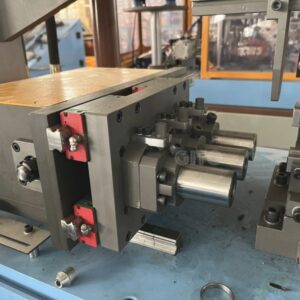
The forming machine shapes flat copper sheets into vapor chamber structures.
Raw material typically arrives in flat copper sheets.
The forming machine shapes the sheets into the proper geometry.
Common vapor chamber forming methods include:
- Hydraulic Pressing
- Stamping
- Precision Forming Machine
- CNC Machining
- Chemical Vapor Formation
Hydraulic pressing machines allow close control of applied pressure.
As a result, hydraulic machines are ideal for repeatable mass production.
The tooling should match the target chamber design.
Additionally, the forming process should minimize material distortion.
Material thinness becomes an even more important concern with ultra-thin vapor chambers.
A quality vapor chamber forming machine should provide:
- Consistent forming force
- Positional accuracy
- Repeatability
- Suitable tooling
- Adjustable process parameters
6. Vapor Chamber Wick Structure Manufacturing Machine
The wick structure helps transport condensed liquid within the vapor chamber.
Wicks move the liquid back to the heat source by capillary action.
As a result, wick structure manufacturing is a key production step.
There are several common types of wick structures.
Popular vapor chamber wick structures include:
Sintered Powder Wick
Metals like copper create a porous structure when sintered.
The sintering process heats up metal powder to bond particles.
Interior pores in the sintered structure generate capillary forces.
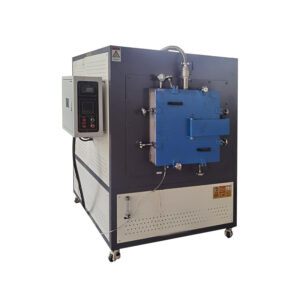
A Vacuum Sintering Furnace can create this vapor chamber structure.
Mesh Wick
Using copper mesh can create the liquid return path.
Mesh structures are relatively simple compared to other options.
Grooved Wick
Guiding channels direct liquid flow through the vapor chamber.
Groove size affects capillary action performance.
Composite Wick
Some vapor chambers use multiple types of wick structures.
Pick the wick equipment that fits your desired vapor chamber design.
7. Vapor Chamber Cleaning Machine
Cleaning machines remove unwanted contaminants from vapor chamber surfaces.
Examples of vapor chamber contaminants include:
- Oil residue
- Dust
- Oxides
- Metal shavings
- Remaining processing residues
Surface contaminants can reduce bonding strength and performance.
As a result, vapor chambers should be cleaned before final assembly.
Cleaning methods can include:
- Ultrasound cleaning
- Chemical dips
- Spraying dissolved chemicals
- Rinsing
- Hot air drying
The process depends on the preceding and following steps.
Automated cleaning also improves production consistency.
8. Vapor Chamber Working Fluid Filling Machine
All vapor chambers require some type of working fluid.
Water is the most common working fluid for electronic applications.
However, operating conditions may require alternative fluids.
Filling machines must precisely control filling volume.
Too much fluid leaves inadequate space for vapor.
Not enough fluid will limit liquid circulation.
A specialized filling machine ensures proper fluid filling amount.
Automatic filling machines can control parameters like:
- Fluid filling quantity
- Filling speed
- Filling pressure
- Fluid selection
- Filling sequence
- Operating conditions
Consistent filling conditions allow more consistent thermal performance.
9. Vapor Chamber Vacuum Pumping and Degassing Machine
Vacuum pumping is one of the most critical vapor chamber production steps.
The machine pumps out air and other non-condensable gases.
If air remains inside the vapor chamber, it will interfere with vapor flow.
As a result, inadequate vacuum levels can harm thermal performance.
A basic vacuum process looks like:
Connect to vacuum pump → Vacuum Pumping → Degassing → Stabilize Pressure → Fluid Filling → Seal chamber
A good vacuum system should produce stable output pressure.
The machine should also produce repeatable results when idling.
Automated vacuum pumping can reduce operator intervention on large production volumes.
Vapor Chamber Vacuum Pumping Machine.
10. Vapor Chamber Laser Sealing Machine
The sealing step occurs after vacuum pumping and fluid filling.
Sealing welds the vapor chamber edges together to create a container.
This process ensures nothing can enter the vapor chamber.
It also prevents the working fluid from leaking out of the chamber.
Laser sealing creates consistent welds with easily controlled energy.
It works well for sealing thin or small vapor chambers.
An automated laser sealing machine can include features like:
- Automatic part placement
- Product clamping
- Laser welding
- Weld monitoring
- Parameter adjustment
- Visual inspection
Automatic laser sealing improves weld consistency.
Automated systems also typically have higher production efficiency.
Vapor Chamber Laser Sealing Machine.
11. Vapor Chamber Hot Press Machine
Many vapor chambers require specific final thickness.
After sealing, manufacturers can use a hot press machine to ensure correct dimensions.
The hot press process can help control:
- Thickness
- Flatness
- Surface contact
- Overall thickness
Ultra-thin vapor chambers need very tight pressing tolerances.
Too much pressure can damage internal components like the wick.
As a result, careful parameter control is required when hot pressing.
Key parameters can include:
- Pressing force
- Pressing temperature
- Pressing speed
- Stroke distance
- Holding duration
- Target thickness
A hydraulic pressing system can produce very stable results.
Vapor Chamber Hot Press Hydraulic Machine.
12. Vapor Chamber Testing Machine
Testing machines are used to confirm final product quality.
Some common tests include:
- Leak Testing
- Thickness Testing
- Vacuum Testing
- Thermal Performance Testing
- Visual Inspection
13. Automatic Vapor Chamber Making Machine
Automation can help improve individual machines.
Furthermore, manufacturers can automate the production line by linking multiple machines.
For example, an automated production line might look like this:
Automatic Feeding → Forming → Cleaning → Wick Processing → Assembly → Filling → Vacuuming → Laser Sealing → Pressing → Testing
Automated material handling can eliminate unnecessary manual operations.
Additionally, it can increase production rhythm.
Finally, manufacturers can link each machine to a central control system.
The system can record and track:
- Vacuum pressure
- Filling amount
- Welding parameters
- Pressing force
- Production date and time
- Testing results
Therefore, automation allows manufacturers to improve productivity and process control.
14. Benefits of Using Specialized Equipment
There are many benefits to using purpose-built manufacturing equipment.
Higher Quality
Dedicated machines can precisely control key manufacturing parameters.
Increased Product Uniformity
The stable operation of production machines will reduce process variation.
Higher Production Efficiency
Automated machines eliminate unnecessary manual operations.
Lower Labor Costs
Machines can automate repetitive production tasks.
Improved Quality Control
Manufacturers can track key process data points.
Higher Production Capacity
Production machines can be scaled to meet higher demands.
Ease of Integration
Individual machines can be linked together to create a complete production line.
15. How to Choose a Vapor Chamber Making Machine
Before you can choose the right machine, you should fully understand your target product.
Start by knowing the chamber dimensions.
Next, you should know the desired thickness level.
Then, know what wick structure you need.
After that, understand your target production capacity.
Other factors to consider when choosing machines include:
- Product size and thickness
- Production capacity
- Degree of automation
- Precision
- Flexibility
- Ability to connect with other machines
- Maintenance requirements
- Technical support
Therefore, consider how the machine fits into your overall production plan.
16. Vapor Chamber Making Machine for Mass Production
When making vapor chambers for mass production, equipment should be stable and repeatable.
Unfortunately, manual operations are often inconsistent.
As a result, mass-production machines are typically automated.
For example, a mass-production system may include:
- Automatic feeding machine
- Automated forming machine
- Automated wick processing machine
- Automatic filling machine
- Automatic vacuum pump
- Automatic laser sealing machine
- Automatic press
- Automatic testing machine
Data from each machine can be logged automatically.
Not only does this help manufacturers pinpoint process issues, but it allows them to establish quality traceability.
Plus, automatic equipment can greatly reduce the production cycle time.
17. Applications of Vapor Chamber Manufacturing
Various industries use vapor chambers to help manage heat.
Smartphones
Small vapor chambers are used to spread heat in smartphones.
Gaming Laptop
They can also be used to cool high-performance laptops.
Graphics Cards
Vapor chambers can help cool some high-performance GPUs.
Server & Data Centers
Vapor chambers can spread heat in high-power servers.
LED Lighting
They are also used in high-power LED lights.
Automotive
Engineers use vapor chambers to cool automotive electronics.
Communication Equipment
Engineers commonly use vapor chambers for passive heat spreading.
As devices continue to shrink, the need for vapor chamber manufacturing equipment will continue to rise.
18. Vapor Chamber Making Machine vs Heat Pipe Equipment
Vapor chambers and heat pipes utilize phase-change heat transfer.
However, they are typically used for different applications due to their structural differences.
Feature | Vapor Chamber | Heat Pipe |
Heat spreading | Two-dimensional | Mainly linear |
Structure | Flat chamber | Tubular structure |
Typical shape | Flat | Round or shaped tube |
Main application | Electronics | Electronics and thermal systems |
Manufacturing | Forming and sealing | Tube processing and sealing |
Wick | Powder, mesh, grooves | Powder, mesh, grooves |
Heat pipes transfer heat primarily along the pipe’s direction.
On the other hand, vapor chambers spread heat across a larger surface area.
Because of this, vapor chamber machines are different from heat pipe equipment.
A Vapor Chamber Making Machine is used to create flat vapor chambers.
Heat pipe equipment focuses more on tube forming, filling, vacuum, and sealing.
19. Why Choose Nanjing Bangwin Machine?
Vapor chamber production requires many different manufacturing processes.
That is why quality machines and integration are important factors to consider.
Nanjing Bangwin Machine is a manufacturer of vapor chamber production machines and production solutions.
The company can assist you with equipment planning for various vapor chamber manufacturing needs.
Its production solutions include vacuum processing machines, filling machines, sealing machines, presses, and testing machines.
For vapor chamber manufacturers looking to start or improve production, the proper machine configuration can allow for more efficient production while keeping production quality consistent.
Learn more about Bangwin’s vapor chamber machines at:
Home
20. FAQ
1. What is a vapor chamber making machine?
A vapor chamber making machine is a machine that is used to make vapor chambers. These machines are typically used in manufacturing settings. Vapor chamber machines can perform many different processes including: forming, filling, vacuuming, sealing, pressing, and testing.
2. What machines are required to build vapor chambers?
Forming machine, Wick making machine, Cleaning Machine, Filling machine, Vacuum machine, Laser sealing machine, Press, Testing machine.
3. What material is most commonly used for vapor chambers?
Due to its high thermal conductivity and machinability, copper is the most commonly used material for vapor chambers.
4. What does the wick do in a vapor chamber?
The wick returns liquid from the cooling surface to the heat source.
5. Why is it necessary to vacuum pump vapor chambers?
If air or other non-condensable gases are present in the vapor chamber, they will also fill the chamber. These gases will affect the evaporation of liquid at the heat source and the condensation of the vapor. As a result, vacuum pumping is one of the most important steps in manufacturing.
6. What does the sealing machine do?
The sealing machine seals the vapor chamber. This creates a weld that will prevent any working fluid from leaking out of the vapor chamber. Additionally, the weld will keep any air from getting into the vapor chamber.
7. Can vapor chamber production be automated?
Almost every step of vapor chamber production can be automated. From material handling to forming, filling, vacuuming, sealing, pressing, and testing can all be done automatically.
8. How much does a vapor chamber machine cost?
A vapor chamber machine can range in cost depending on the machine type, production capability, level of automation, precision, tooling, and customization options. Request a quotation from a manufacturer that understands your specific needs.
9. Can one machine produce different sizes of vapor chambers?
Depending on the machine’s tooling, it may be possible to produce varying sizes. However, when selecting a machine always verify the sizes your equipment will be able to produce.
10. How do I select a vendor to supply me a vapor chamber machine?
Consider factors such as equipment precision, how long the manufacturer has produced vapor chamber machines, customization, level of automation, installation, commissioning, training, and after-sales technical support. If a vendor has experience with full production lines, they can help you properly integrate each machine.
21. Conclusion
A Vapor Chamber Making Machine allows manufacturers to produce vapor chambers with the precision that modern applications require.
Many different machines are used throughout the production process.
Forms create the outer shape of the vapor chamber.
Wick machines create capillary structures inside vapor chambers.
Filling machines add the correct amount of working fluid.
Vacuum machines evacuate the chamber.
The sealing machine laser seals the chamber.
Hot presses are used to form the thickness of the vapor chamber.
Finally, vapor chamber testing machines ensure quality control of final products.
When producing vapor chambers at higher volumes, these machines can be integrated to create a Vapor Chamber Production Line.
With electronics becoming smaller and more powerful, many devices are generating more heat than their systems can dissipate.
Efficient thermal management is critical for stable device operation. As a result, the demand for vapor chambers will continue to increase.
It is critical that manufacturers select high-quality machines that are properly integrated to produce stable vapor chambers.